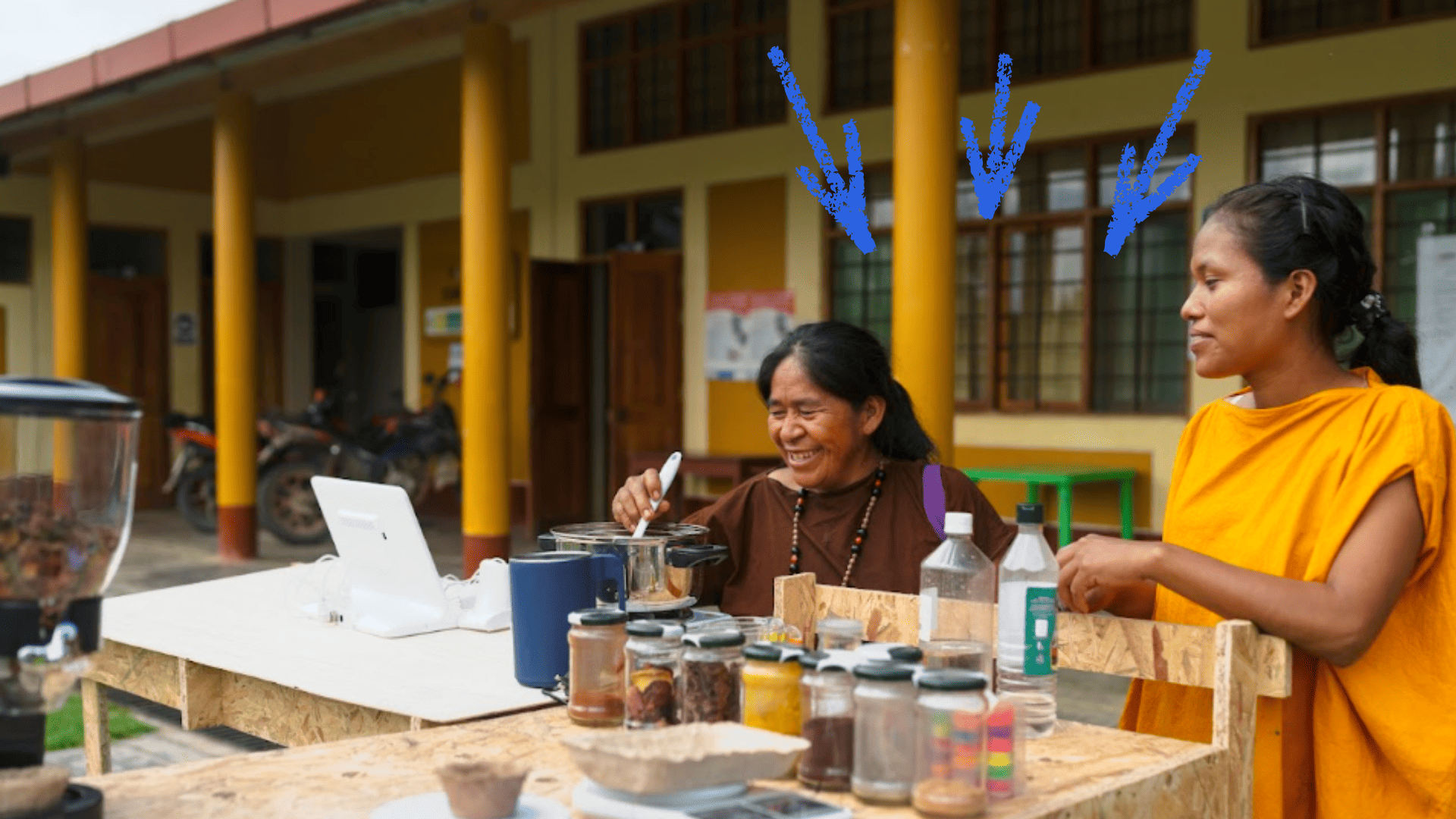
Assignment Requirements
Learning outcomes
- Create your own integrated design (Different digital fabrication processes are integrated to a product).
- Demonstrate 2D & 3D modelling competencies applied to your own designs.
- Select and apply appropriate additive and subtractive fabrication processes.
- Demonstrate competence in design, fabrication and programming of your own fabbed microcontroller PCB, including an input & output.
- Demonstrate techniques and applications in system integration.
Have you answered these questions?
- Made your slide> 1920 x 1080 pixels with your name, project name, Fab Lab name, a photo/render/sketch of your project, a brief description of what your project is/does.✅
- Made a ~1 minute (25MB/1080p) video of your final project showing its fabrication and functionality.✅.
- Made a separate Final Project page that summarises/documents your project.✅.
- Included the BOM (Bill of Materials) for your project.✅.
- Documented how you implemented system integration in your final project.✅.
- Linked to your presentation.png and presentation.mp4; make sure they are located to the root of your website.✅.
- Included all of your original design files in the archive (2D & 3D, board files & code). No external hosting of final project files - discuss file sizes with your instructor.✅.
- Included the license you chose.✅.
- Acknowledged work done by others.✅.
Weekly planning
This week was dedicated to the planning phase of the final project, the FAB (Family-Based Mobile Learning Unit). The main objectives, functions, and components of the unit were defined, taking into account the needs of Amazonian communities and the environmental conditions where it will be used.
In addition, the fabrication, assembly, and validation processes were organized, including the storage system, foldable workspace, and the integration of solar panels for renewable energy generation. Community participation activities were also planned to ensure that the unit responds to local needs and expectations. This stage established a clear roadmap for the development and implementation of the FAB, which will be used during Forest Academy activities as a mobile space for learning, innovation, and collaboration.
s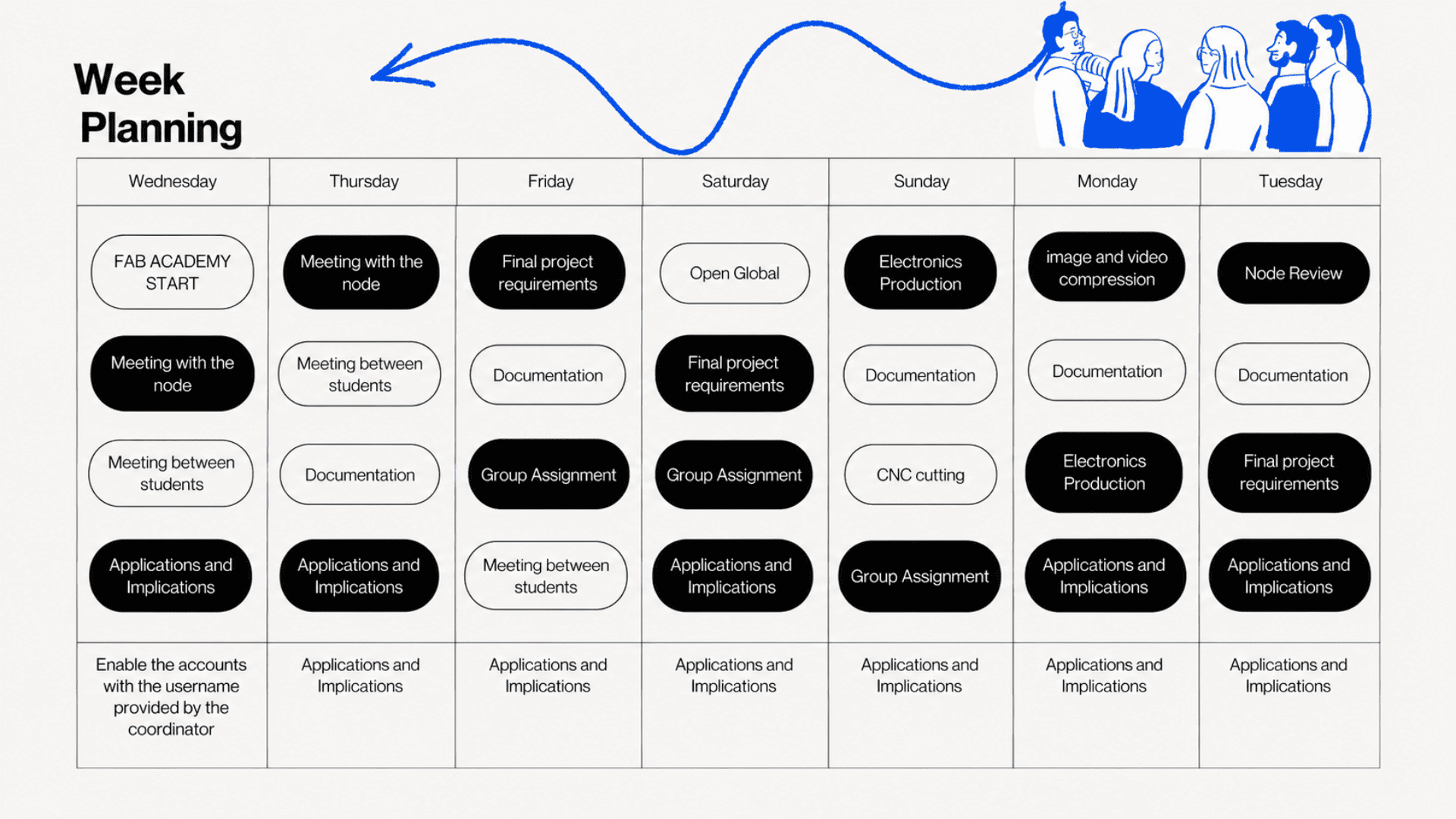
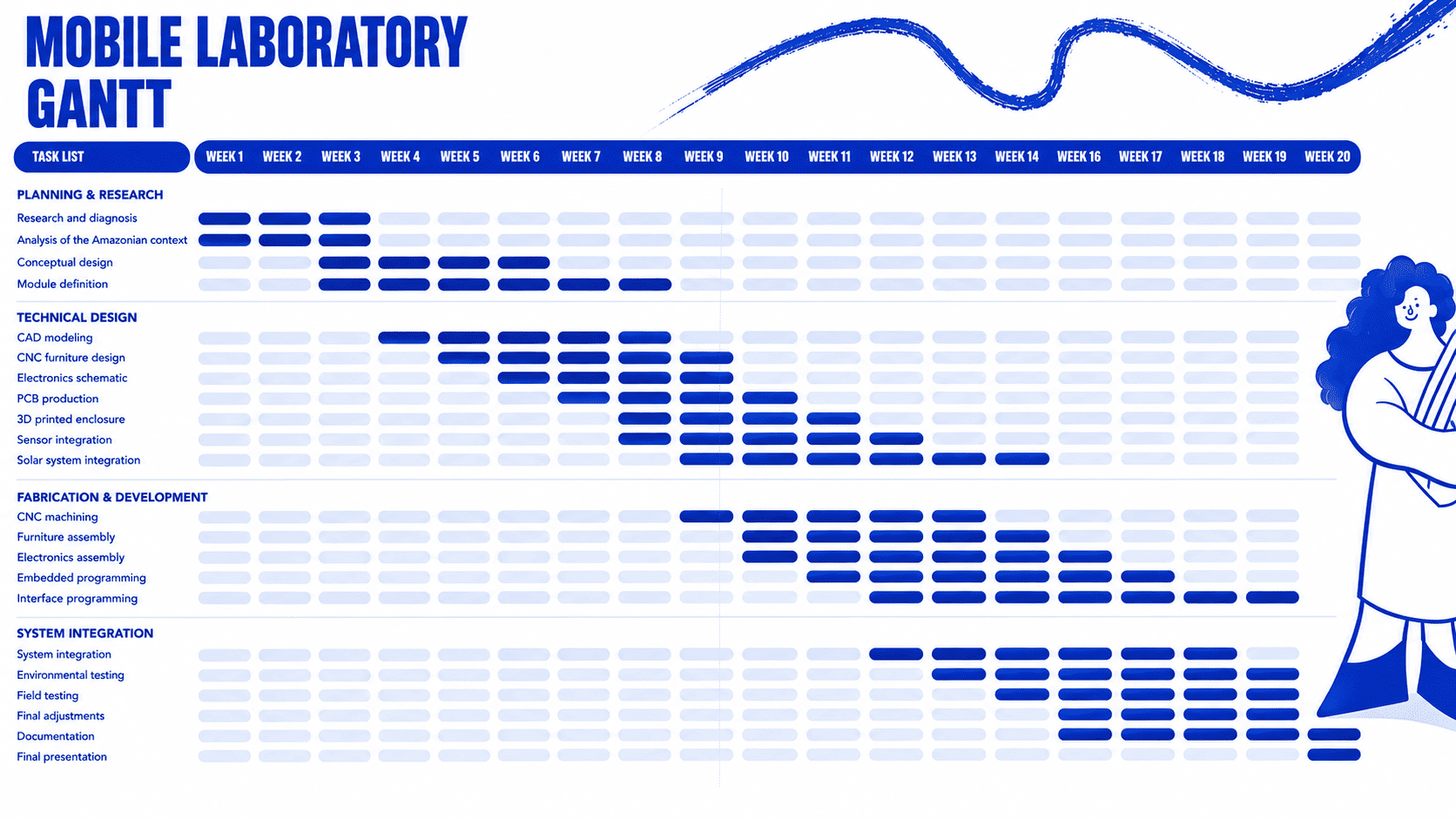
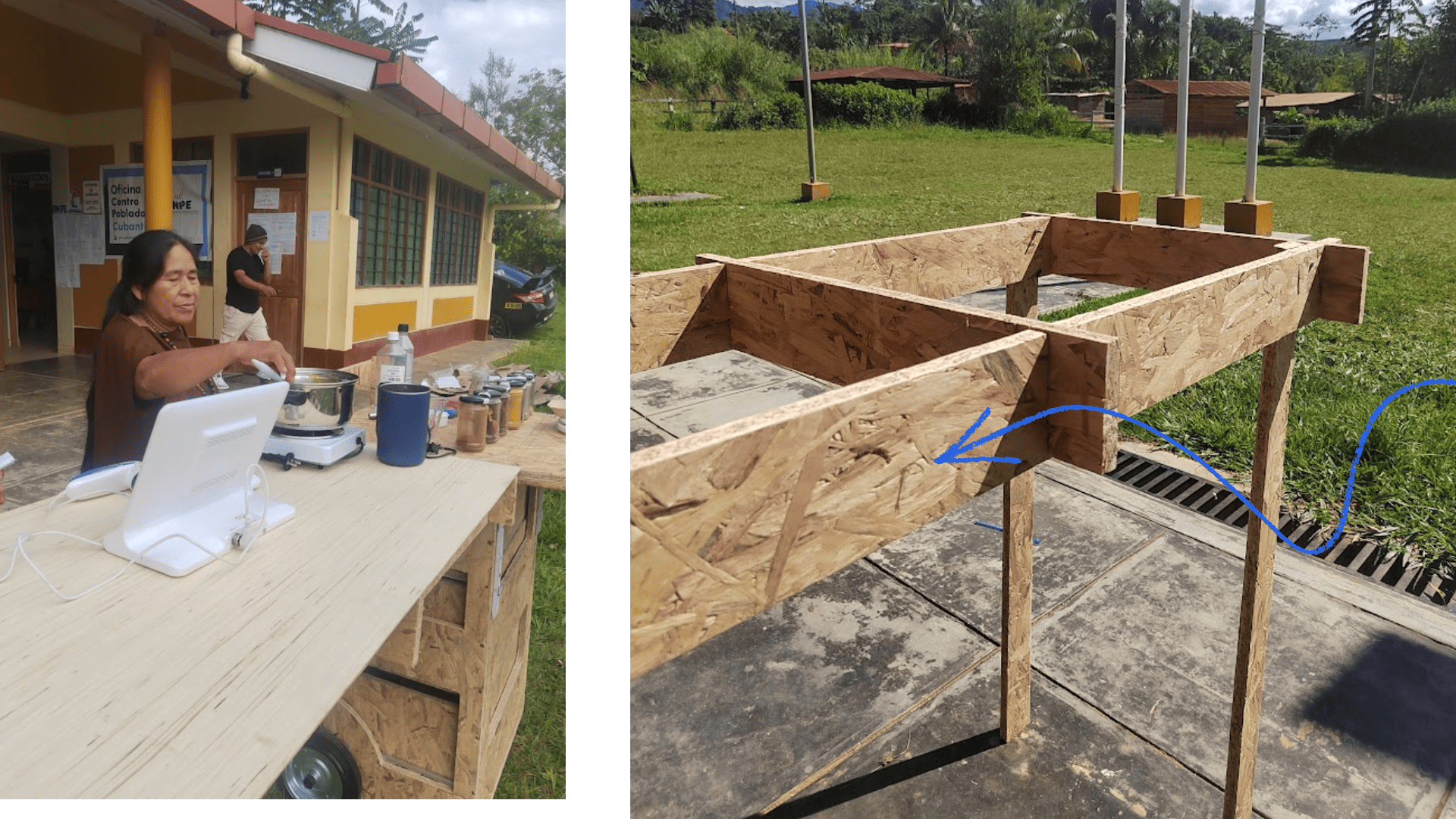
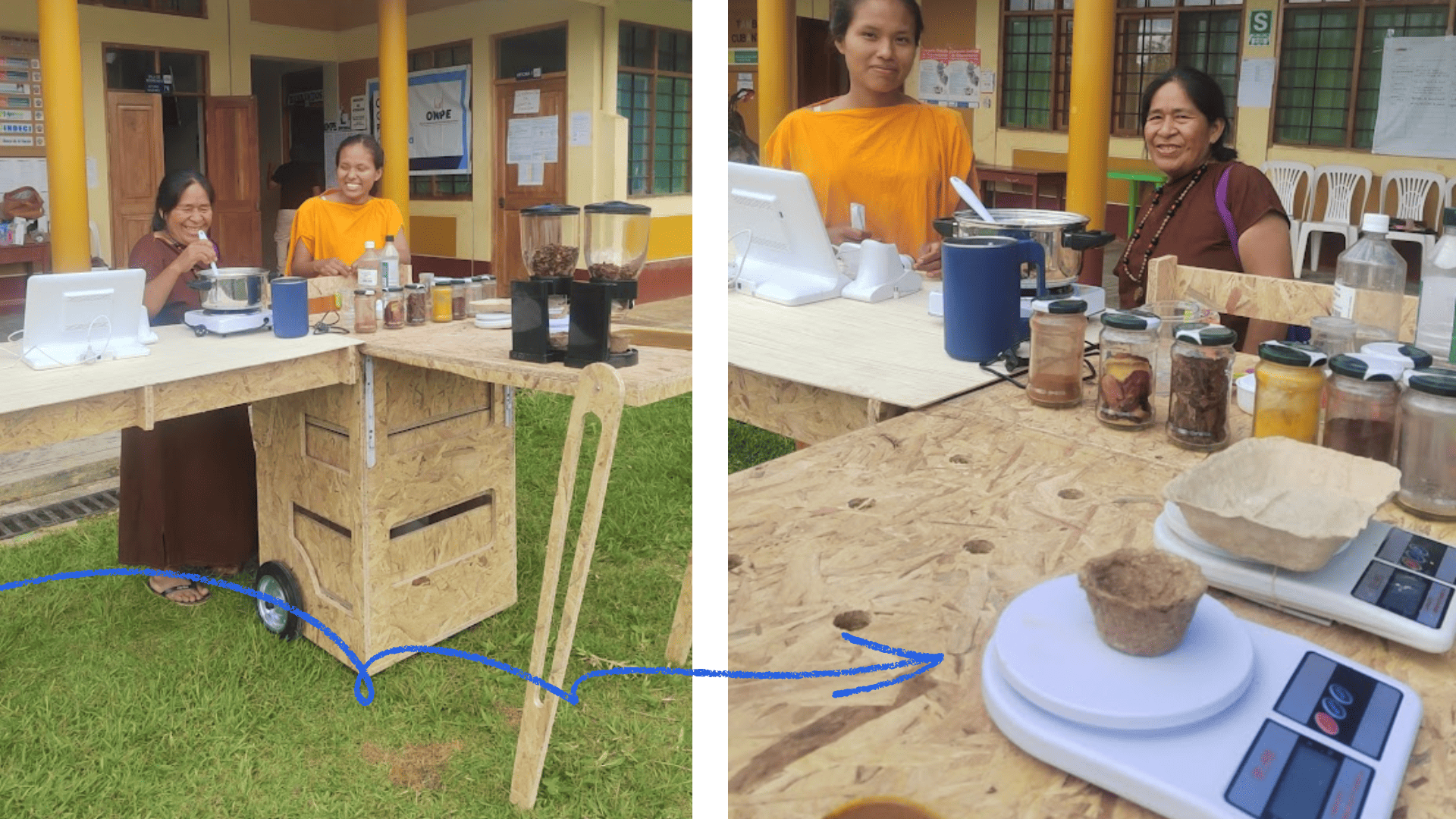
The project will develop a Mobile Learning and Fabrication Lab designed to safely transport workshop, laboratory, and technology kits across communities in the Peruvian Amazon. The unit will function as a durable storage system that protects equipment from humidity, rain, and damage during long journeys by car and boat.
In addition, the mobile unit will unfold into a functional workspace and incorporate a solar-powered energy system to provide electricity in areas with limited or no access to the electrical grid. The project will be developed through a participatory process involving community members in the design, validation, and testing stages, ensuring that the solution responds to local needs.
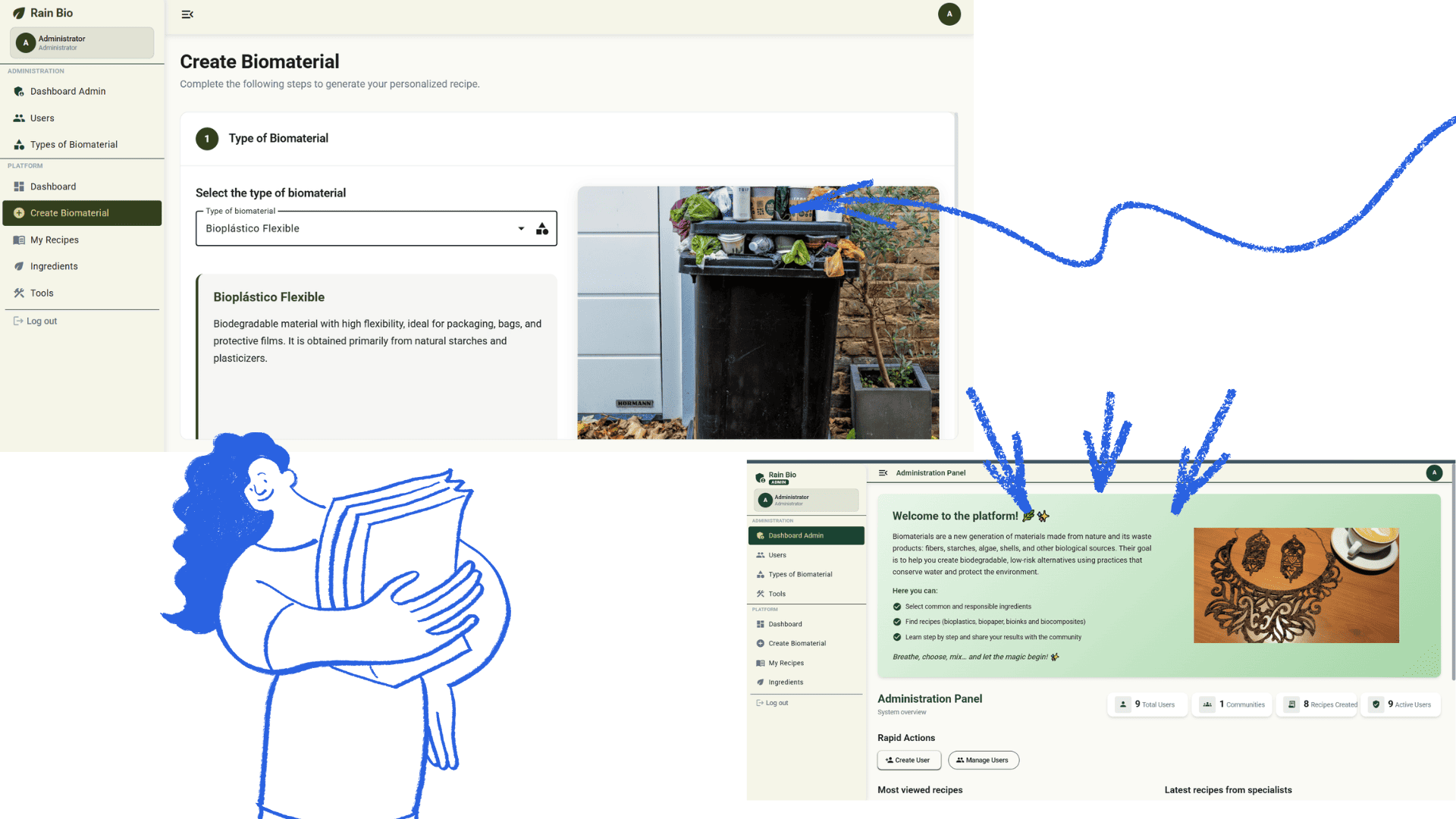
The laboratory will also integrate environmental monitoring systems to measure temperature and humidity, two key variables in the preparation and experimentation of biomaterials and biopolymers. The collected data will be uploaded to a web platform, creating a database that supports research, improves material formulations, and contributes to the development of new biomaterials adapted to the environmental conditions of the Peruvian Amazon.
The final goal is to improve access to tools, renewable energy, scientific knowledge, and learning opportunities while supporting the democratization of technology and biofabrication in Amazonian communities.
What Will Be Done in the Project?
Who Has Done Something Similar Before?
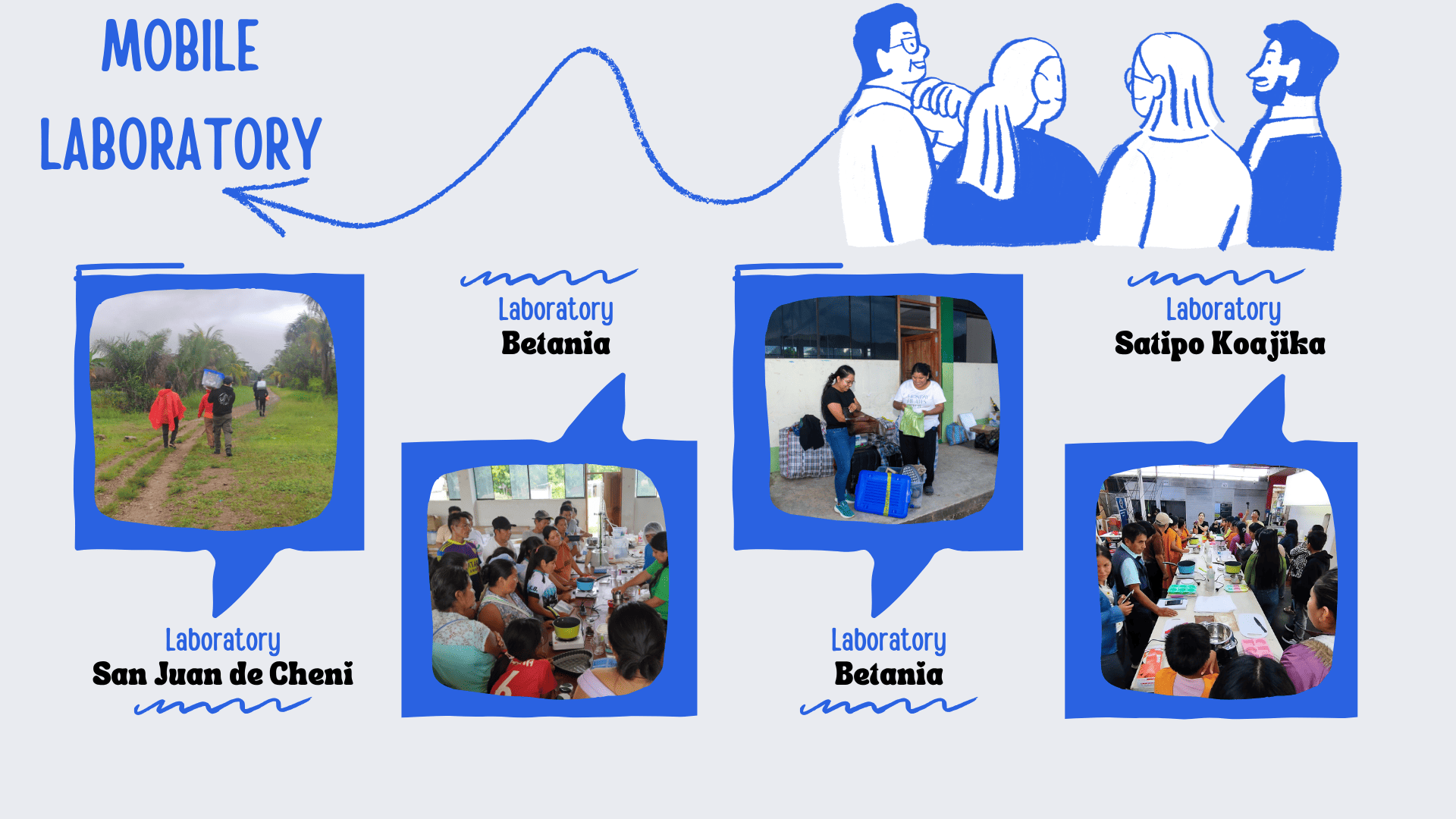
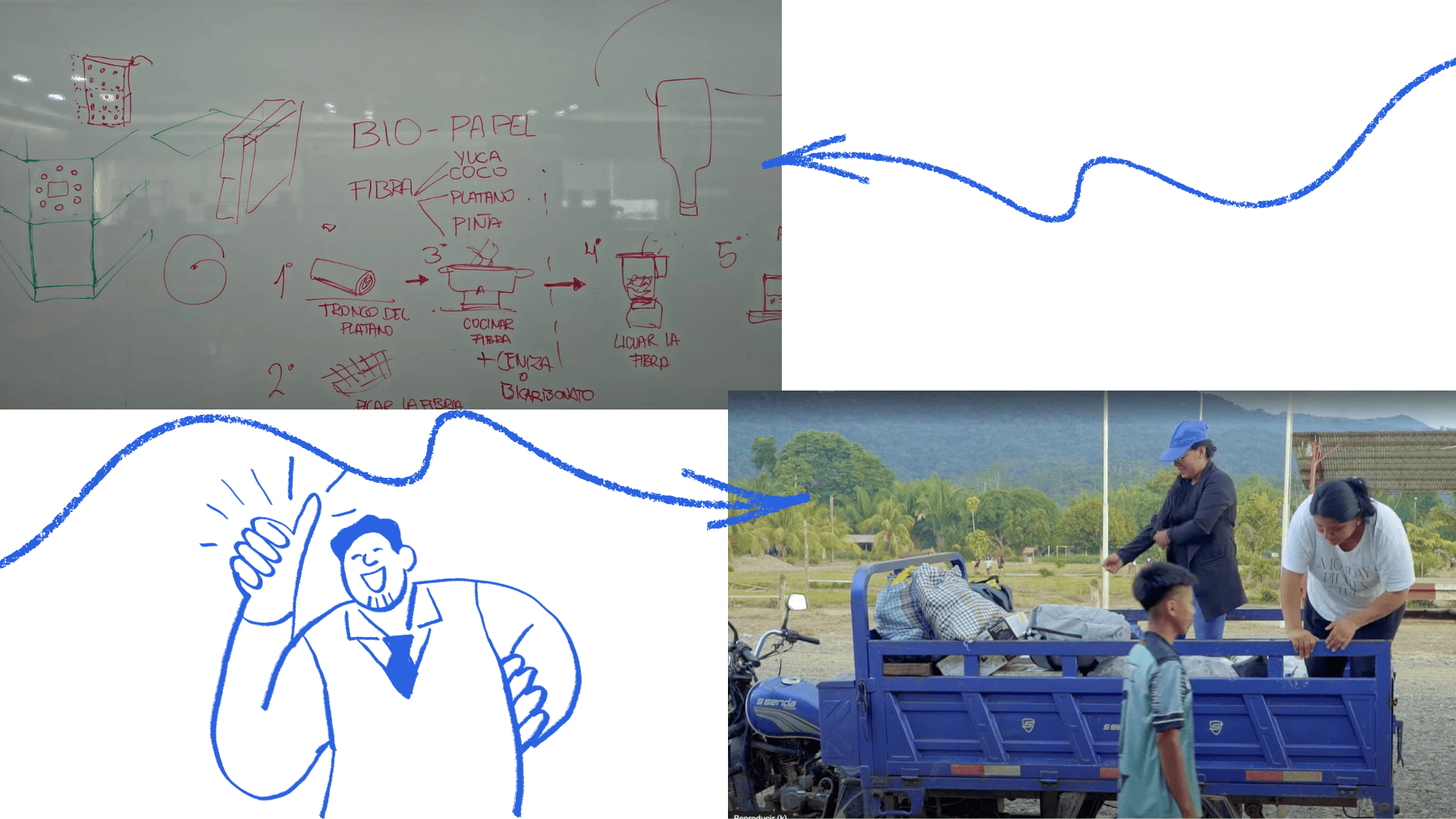
During the research process, several projects related to mobile laboratories, modular furniture, and equipment transportation systems for rural and remote areas were identified. However, no project was found that combines all the features proposed in this initiative. This idea emerged from several years of experience working with Regen in the Peruvian Amazon, conducting workshops, biofabrication activities, and community-based learning processes.
Through this work, recurring challenges became evident, including the transportation of tools and laboratory kits in bags or improvised containers, damage caused by humidity and rain during long journeys by car and boat, and the limited access to electricity in many communities. These experiences provided valuable insights into local needs and helped shape a solution specifically designed for the Amazonian context.
What makes this project unique is the integration of a mobile laboratory that not only protects and transports equipment but also transforms into a functional workspace. In addition, it incorporates solar panels to provide renewable energy and environmental sensors that monitor temperature and humidity, two key variables for the preparation and experimentation of biomaterials and biopolymers.
Another innovative aspect is the integration of the collected environmental data with the Regen.now platform. Information gathered in the communities will contribute to a growing database that can support future research and the development of new biomaterials adapted to the specific environmental conditions of the Peruvian Amazon.
Finally, the project is also the result of the skills and knowledge acquired during the Academy. Digital design, electronics, CNC routing, laser cutting, vinyl cutting, and 3D printing have made it possible to transform a real field-based need into a practical, portable, and community-centered solution that promotes access to technology, renewable energy, and learning opportunities.
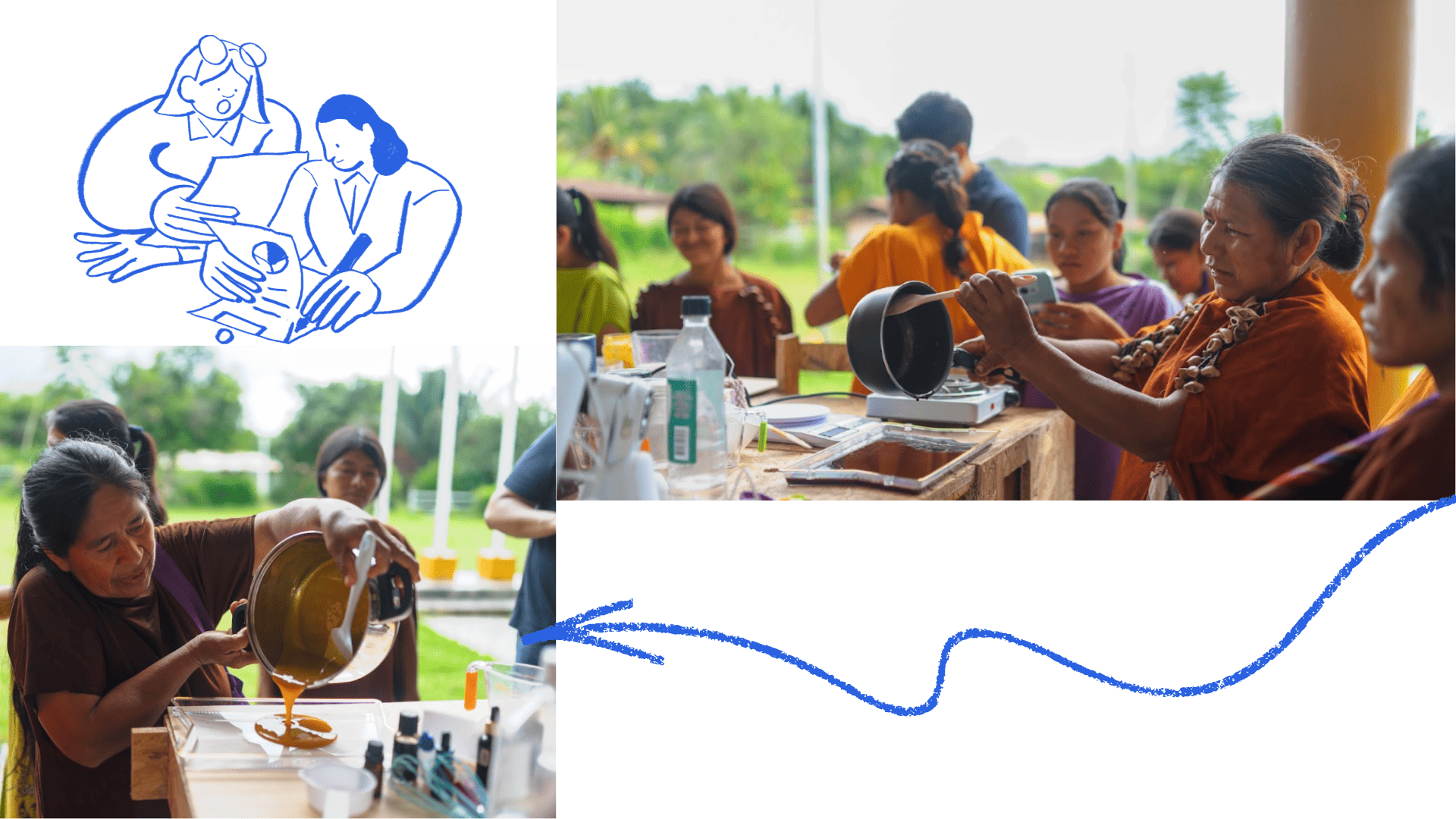
The main sources for the development of this project come from several years of experience working with Regen in the Peruvian Amazon, where recurring challenges were identified related to transporting laboratory kits, protecting materials from humidity and rain, limited access to electricity, and the need to collect environmental data for biomaterials research.
The project is also based on the knowledge acquired during the Academy, especially in electronics, programming, digital design, and digital fabrication. These skills made it possible to transform a real field need into a functional and adaptable technological solution for mobile environments.
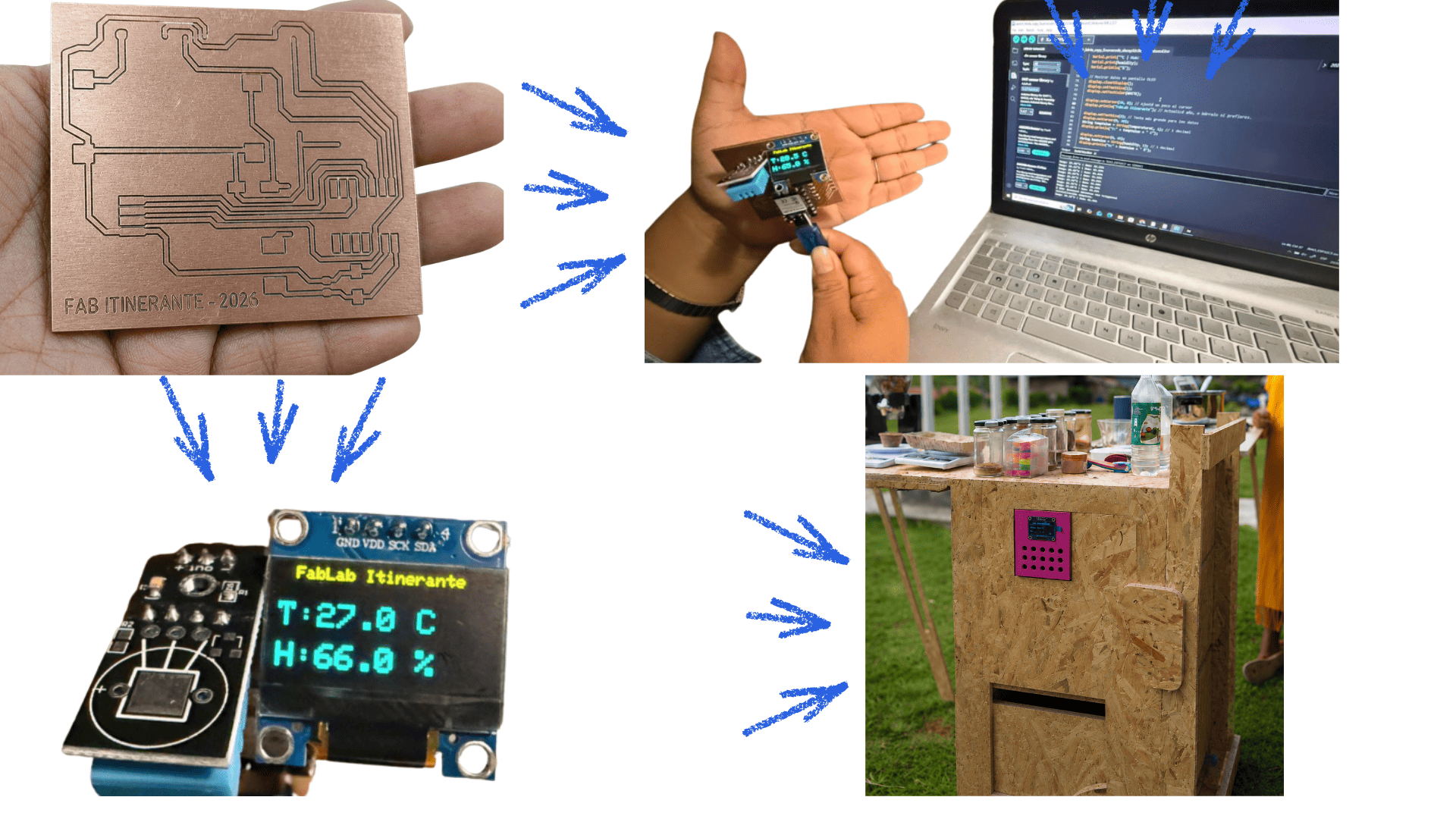
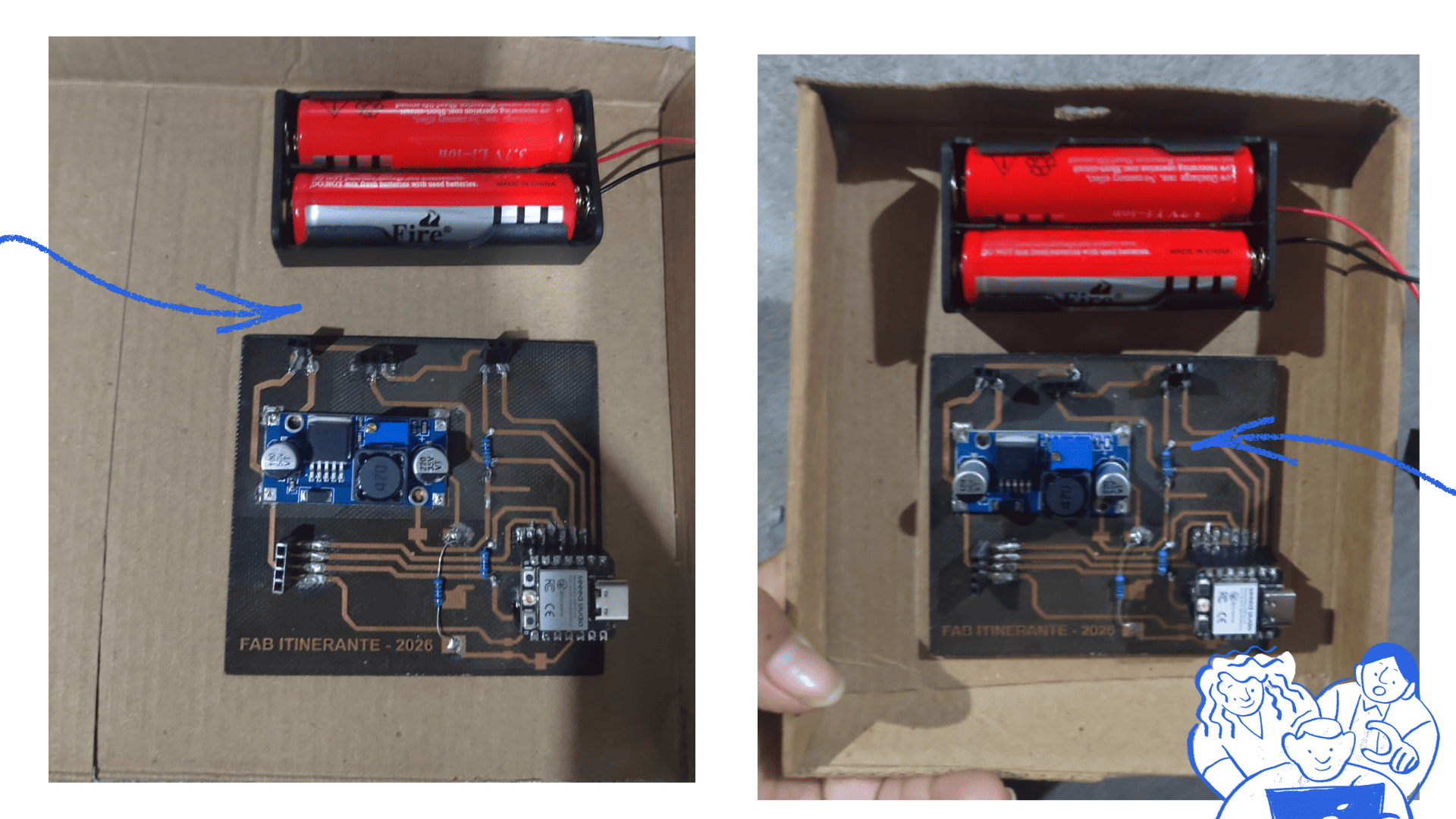
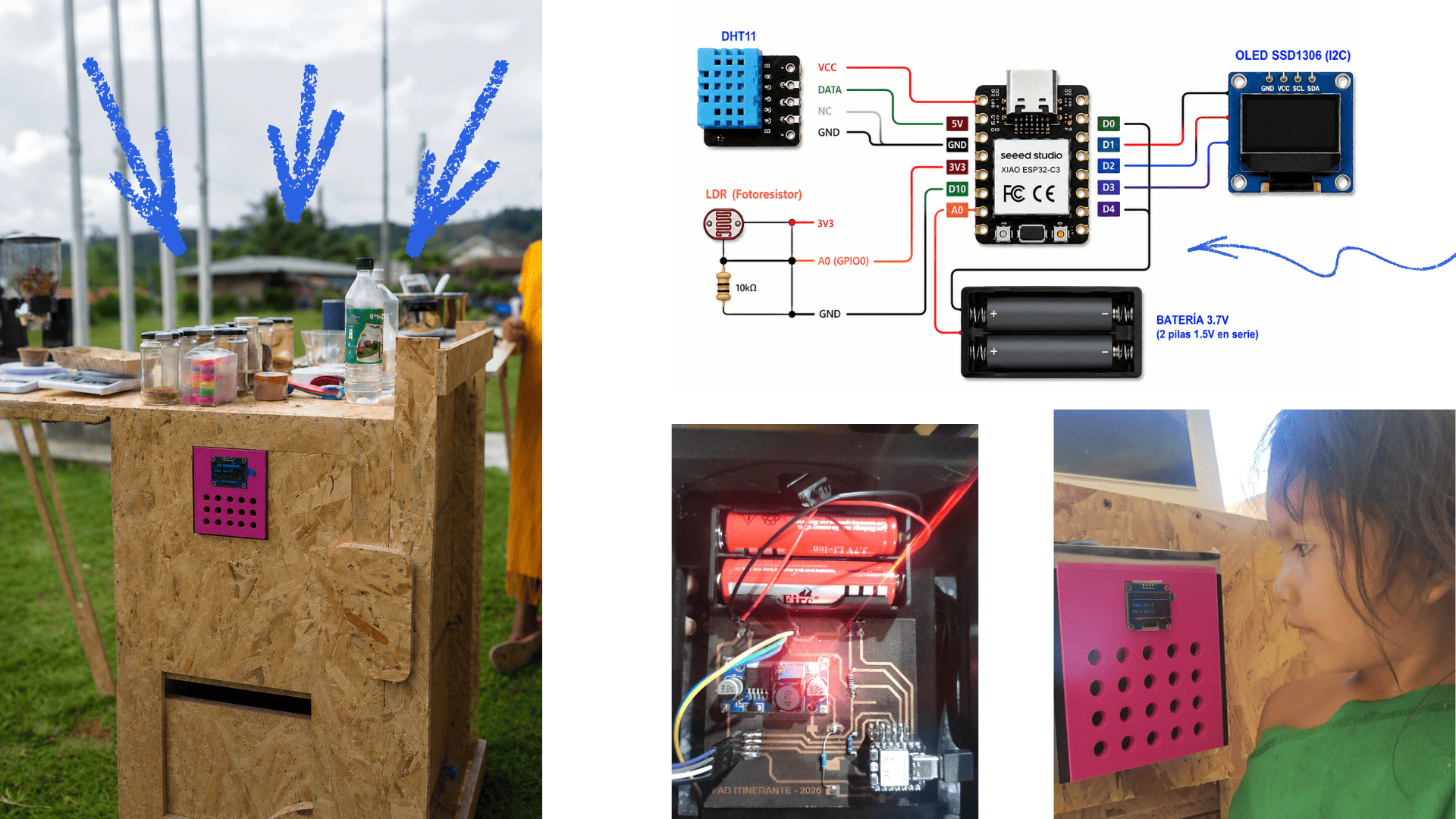
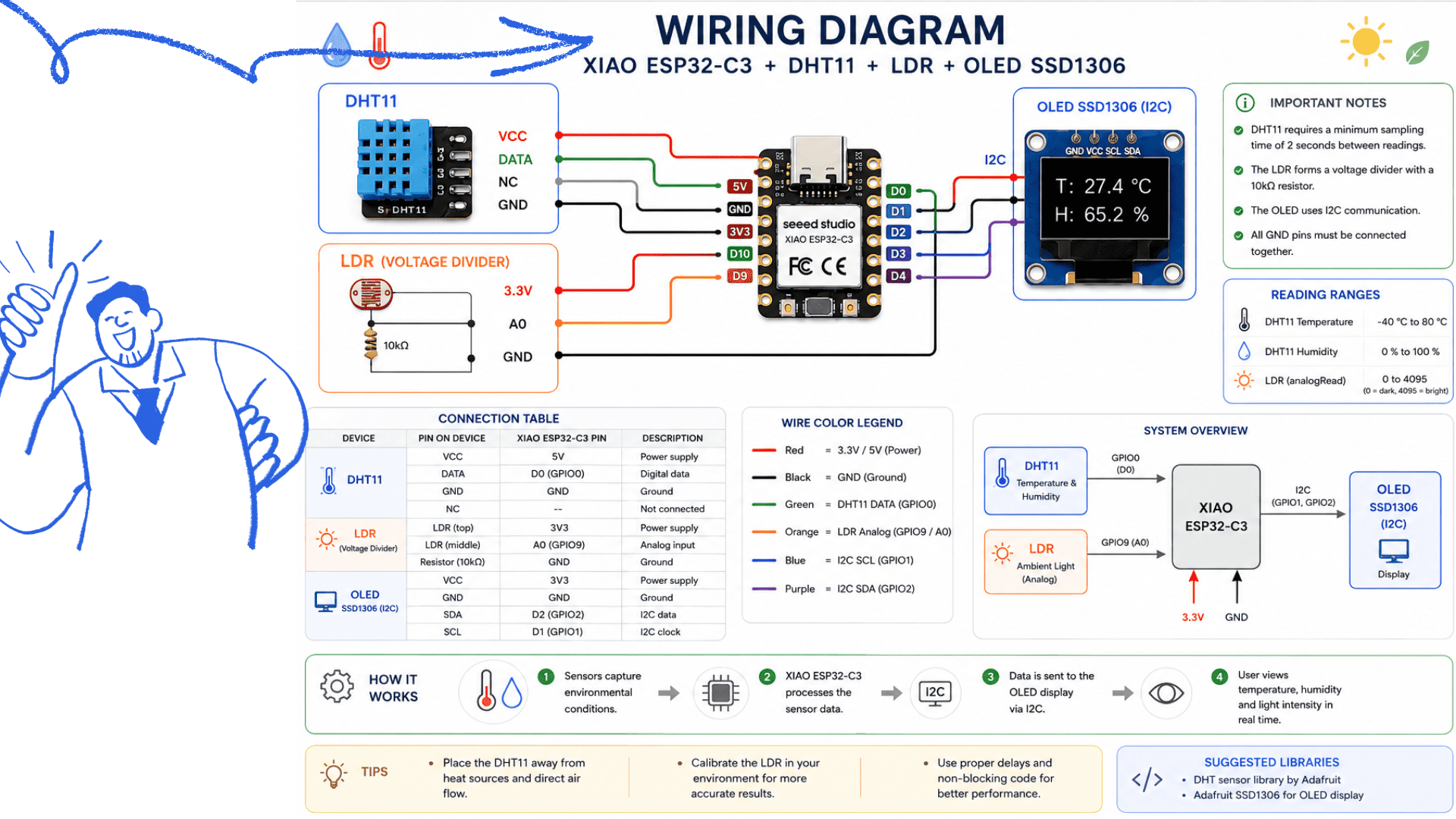
At a technical level, the system is built around the XIAO ESP32-C3 microcontroller, responsible for data acquisition, processing, and communication. It integrates a DHT11 sensor for temperature and humidity, an LDR sensor for ambient light measurement, and an SSD1306 OLED display for local real-time visualization of data. A programming system was also developed to manage sensor reading, serial communication, and interaction with a Processing-based interface.
The system includes a rechargeable battery and an LM2596 voltage regulator, allowing stable operation in both portable and charging modes. This ensures autonomy in remote Amazonian communities where access to electricity is limited or unavailable.
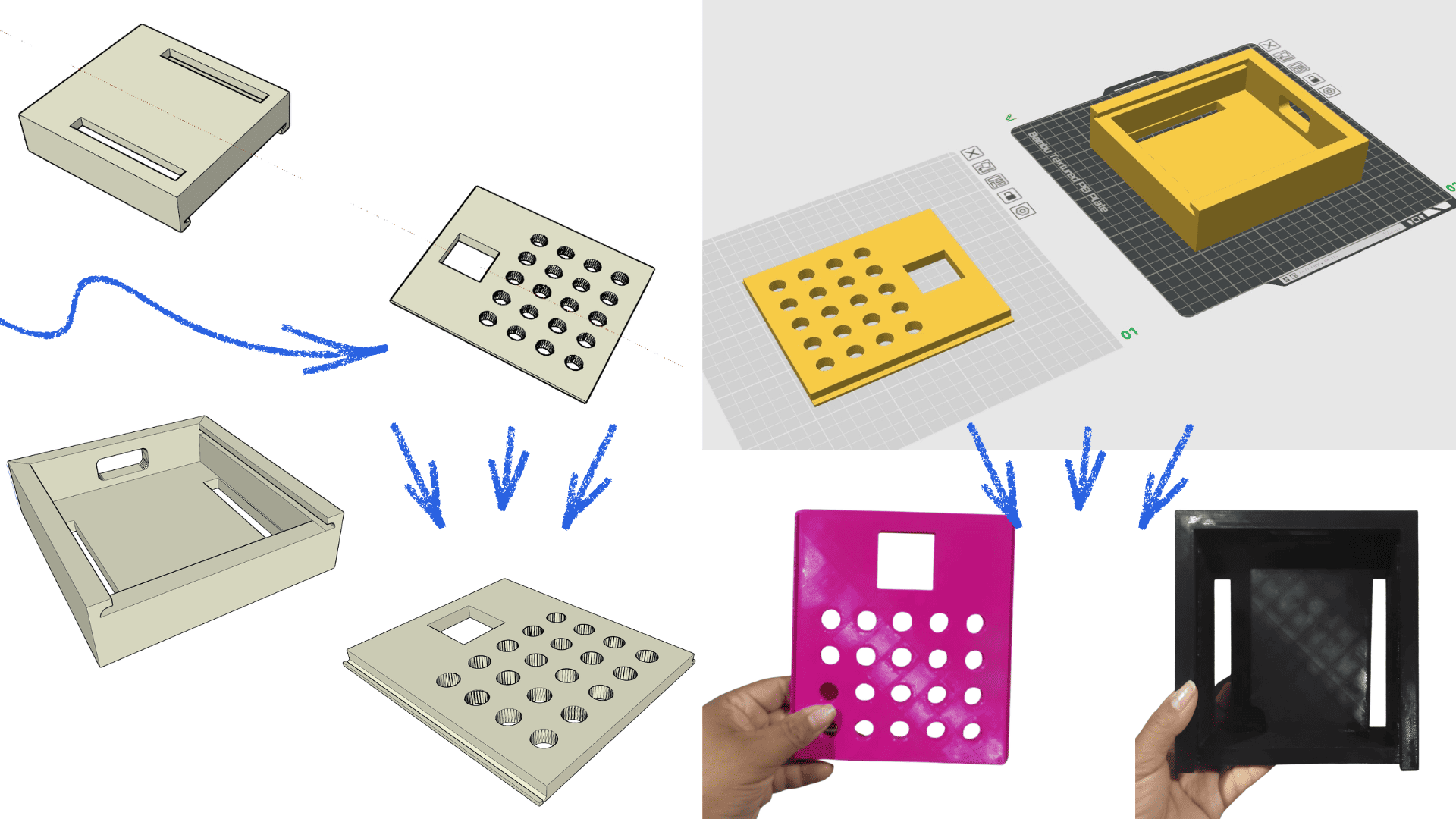
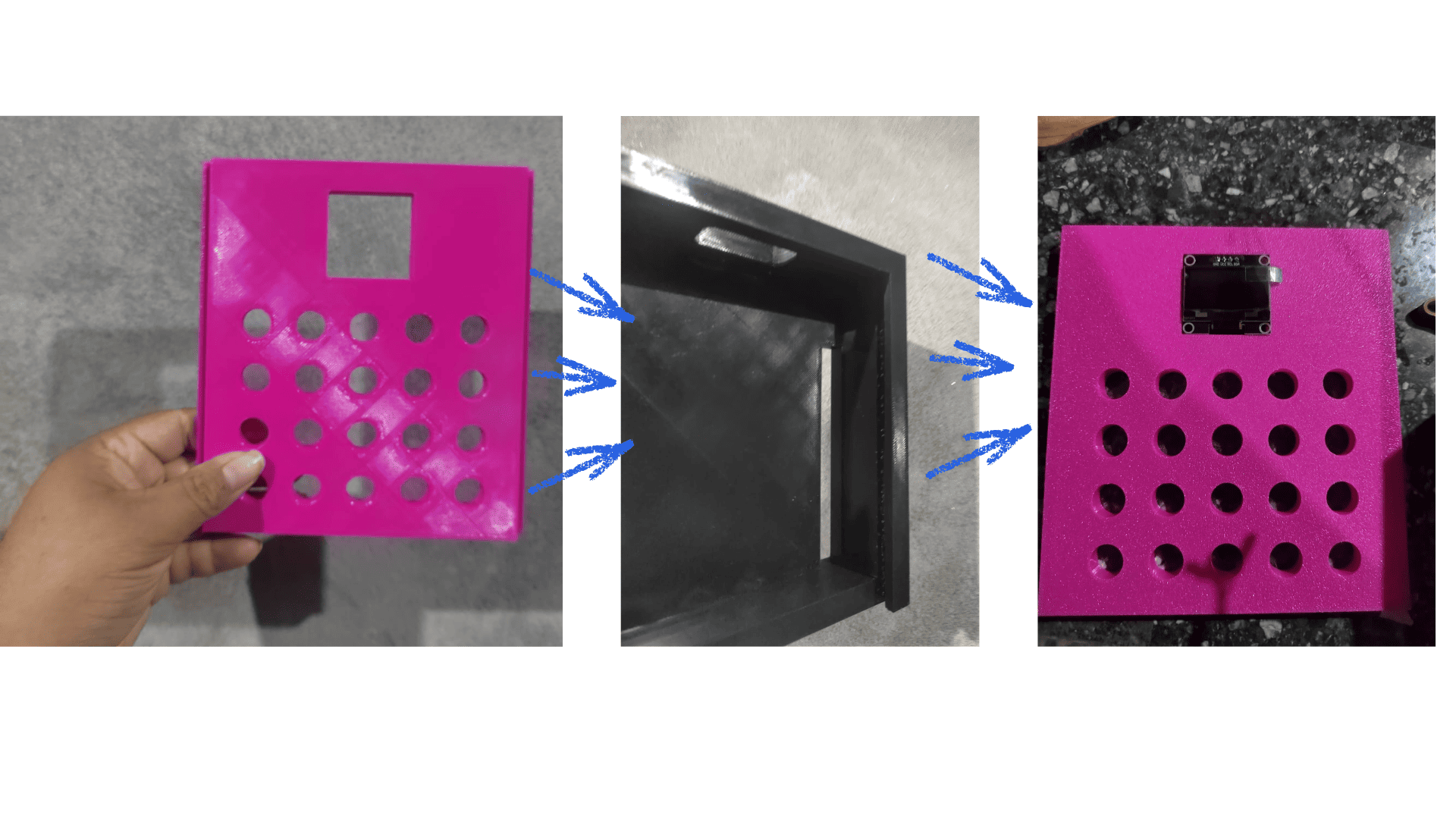
A physical enclosure for the mobile laboratory was also designed. Before fabrication, hand sketches were developed to explore different structural options, verify internal layout, and ensure proper fitting of all electronic components. This iterative design process helped optimize space, improve usability, and reduce errors during fabrication.
The system is composed of the following components:
Overall, the system integrates hardware, software, and physical design into a unified solution. The ESP32-C3 collects environmental data, processes it locally, and transmits it to a digital interface for visualization and control. This enables a complete monitoring and interaction system adapted to the conditions of the Peruvian Amazon.
The Mobile Laboratory project was developed through the division of several subsystems, which were progressively integrated throughout the design and fabrication process in order to achieve a fully functional, stable, and field-adapted prototype for the Peruvian Amazon.
The integration process required multiple design iterations and testing phases, as modifications in one subsystem often affected the others. Particular attention was given to dimensions, internal layout, cable routing, component placement, energy management, and structural assembly. These adjustments ensured that all subsystems could function together efficiently within the limited space of the mobile laboratory.
A key aspect of the integration process was ensuring that the furniture structure, electronics, energy system, and protective enclosure worked as a single unit. The mobile laboratory was designed not only as a transport solution but also as a deployable workspace capable of supporting educational activities, environmental monitoring, and biomaterial experimentation in remote Amazonian communities.
Overall, this integration strategy enabled the development of a coherent, portable, and functional mobile laboratory that combines digital fabrication, electronics, renewable energy, and modular design. The resulting system can operate in demanding field conditions while supporting learning, research, and community-driven innovation throughout the Peruvian Amazon.
In this task, the main objective was to explore the interconnection and communication between electronic devices using the ESP32-C3 microcontroller. Different tests were carried out to understand how data can be transmitted, received, and visualized in real time through communication protocols and connected systems.
For these experiments, the PCB previously developed in the Electronic Production course was reused. This allowed continuity from earlier work while expanding its functionality for networking and communication applications. It demonstrated that a custom-designed board can be adapted to multiple exercises and integrated into different interactive systems.
In addition, several components such as OLED displays, sensors, and communication interfaces were tested to validate system behavior and improve interaction between hardware and software. These activities also contributed to the development of the final project and the concept of the mobile laboratory.
The Mobile Itinerant Laboratory will integrate multiple processes learned throughout Fab Academy to develop an autonomous, portable, and adaptable solution for the Peruvian Amazon. The project combines digital design, digital fabrication, electronics, programming, renewable energy, and system integration to create a mobile unit capable of transporting tools, collecting environmental data, supporting biomaterial research, and facilitating learning spaces in remote communities.
By combining these processes, the Mobile Itinerant Laboratory becomes a comprehensive platform that merges digital fabrication, electronics, renewable energy, environmental monitoring, biomaterial research, and community-centered innovation. The project aims to democratize access to technology and create new opportunities for learning, experimentation, and sustainable development throughout the Peruvian Amazon.
The following Arduino code was used to connect the XIAO ESP32-C3
with the DHT11 sensor and OLED display, allowing real-time
temperature and humidity monitoring.
During the development of the Mobile Itinerant Laboratory, several questions must be addressed to define both the design and functionality of the system. One of the main challenges is determining how the laboratory will communicate with digital platforms, allowing information collected in the field to be stored, visualized, and shared efficiently. It will also be important to identify which sensors are most suitable for collecting relevant environmental data, especially temperature, humidity, and light intensity, which are essential variables for biomaterial and biopolymer research.
Another key question is how to connect the system with the Regen.now web platform so that the collected data can support future research and contribute to the development of new biomaterials adapted to the conditions of the Peruvian Amazon. In addition, it will be necessary to determine how tools, laboratory kits, electronic components, and educational materials can be efficiently organized within a compact and portable structure.
The project must also address how to design a folding system that can be transported as a durable storage case and quickly deployed into a functional workspace when arriving in a community. Likewise, it is important to evaluate how to protect equipment from humidity, rain, dust, and the demanding conditions of transportation by car and boat.
Finally, the project will need to determine how renewable energy systems can be integrated efficiently through solar panels and rechargeable batteries, and how communities can participate in validating the design to ensure that the solution responds to real needs and remains useful for educational, technological, and community activities over time.
The Mobile Itinerant Laboratory project will be considered successful if it meets the following functional, structural, and operational criteria in real field conditions.
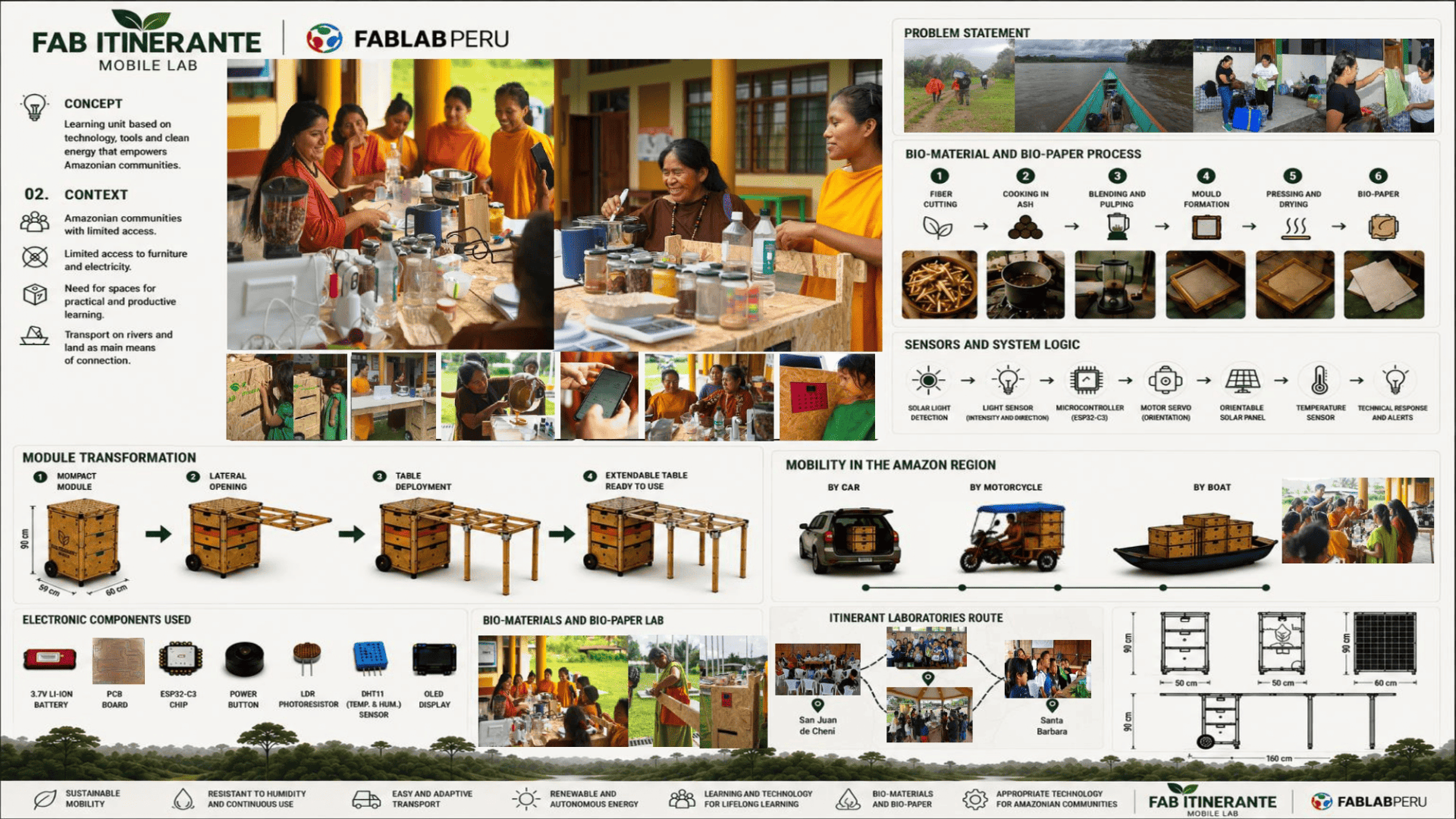
A summary slide for the Mobile Itinerant Laboratory has been prepared. This slide presents an overall overview of the project, including its purpose, the problem it addresses, and the proposed solution: a portable, autonomous, and deployable system designed as a transport case and functional workspace for communities in the Peruvian Amazon.
The slide also summarizes the main digital fabrication processes used in the project, including 2D and 3D design, laser cutting, CNC machining, 3D printing, electronics, and embedded programming. It highlights the key system components such as the ESP32-C3 microcontroller, environmental sensors, OLED display, battery and solar power system, and web platform integration for data monitoring.
In addition, the expected outcome of the project is presented: a fully functional mobile laboratory capable of safely transporting work kits, rapidly deploying in field conditions, and generating environmental data for educational activities, research, and biomaterial development.
This slide will be updated and refined before the final presentation to reflect the fully integrated and validated version of the system.
The reference file for the slide is named presentation.png.
A summary video of the Mobile Itinerant Laboratory project is being developed. This video will explain the overall system operation, its field deployment, and the integration of structural and electronic modules in real use conditions within Amazonian communities.
The video will present the complete development process, starting from the initial problem of transporting laboratory kits, and leading to the final solution as a mobile laboratory. It will include demonstrations of the foldable structure, sensor operation, real-time data visualization, and the autonomous energy system.
This material will serve as the final support for the project presentation and will be updated with the fully assembled and validated version of the prototype.
The Mobile Itinerant Laboratory emerges from the need to solve the challenges associated with transporting work kits and tools to communities in the Peruvian Amazon. Currently, materials are carried in improvised bags or containers, which increases the risk of damage due to humidity, rain, and constant movement during travel by road and boat. In addition, limited access to electricity in many communities restricts the use of technological tools and the continuity of educational activities.
The project proposes an integrated solution based on digital fabrication, electronics, and modular design: a mobile system that functions as a resistant transport case and can also transform into a deployable workspace. This unit incorporates an ESP32-C3-based electronic system, environmental sensors, a visualization interface, and an autonomous energy system using a rechargeable battery and solar panel, enabling operation in off-grid environments.
During the development process, different subsystems have been integrated, including the furniture structure, electronic system, embedded programming, energy management, and internal organization of tools and components. Design, assembly, and validation tests have also been carried out to ensure that the system is functional, resistant, and adaptable to real field conditions.
In the next stages, final system integration will continue, including optimization of the suitcase-to-workspace deployment mechanism, improvement of the data monitoring interface, and testing in real environments with community participation. The final goal is to obtain a fully functional prototype that enhances access to technology, hands-on learning, and the development of educational and research activities in the Peruvian Amazon.
This project represents more than a technical solution; it is an exploration of how design, technology, and context can be combined to respond to real needs in remote environments. Developing the Mobile Itinerant Laboratory has highlighted the importance of adaptability, as every design decision must consider transportation limitations, environmental conditions, and local realities in the Amazon.
One of the most significant learnings has been the value of integration across disciplines. Combining digital fabrication, electronics, programming, and renewable energy has made it possible to envision a system that is not only functional, but also meaningful in its context of use. At the same time, the project has reinforced the importance of testing, iteration, and continuous improvement, since each subsystem influences the performance of the whole system.
Beyond the technical aspects, this work emphasizes the role of community engagement and real-world validation. The laboratory is designed not as an isolated artifact, but as a tool that must evolve with the people who use it. This perspective transforms the project into a collaborative process, where technology becomes a bridge for learning, experimentation, and empowerment.
Ultimately, the Mobile Itinerant Laboratory reflects a broader vision of accessible and distributed technology—one that travels, adapts, and supports knowledge creation in places where conventional infrastructure is limited or absent.
What sources will be used?
Integration Plan
Subsystem
Components
Purpose of Integration
Furniture Structure System
Modular furniture, foldable table, storage unit, CNC-fabricated structure
Provides portability, structural strength, secure storage, and integration of the workspace in field conditions.
Electronic System
PCB, XIAO ESP32-C3, wiring, OLED display, DHT11 sensor, LDR sensor, rechargeable battery, LM2596 voltage regulator
Enables environmental data acquisition, information processing, communication between components, and portable power management.
Interaction System
OLED display, LED feedback, sensors, switches
Allows user interaction with the system and real-time visualization of laboratory status and environmental data.
Embedded Programming
Arduino code, sensor monitoring, OLED interface, serial communication, data processing
Manages system behavior, sensor readings, data transmission, display updates, and communication between hardware and software.
Energy System
Solar panel, rechargeable battery, LM2596 voltage regulator, power connections
Provides autonomous and renewable energy for operation in remote communities with limited or no access to electricity.
Protection and Enclosure System
3D-printed enclosure, internal supports, electronic housing structure
Protects electronic components, improves internal organization, and ensures system stability during transportation and field deployment.
What Materials and Components Will Be Used?
List of Components (USD)
#
Item Description
Quantity
Unit
Unit Price (USD)
Total (USD)
Place of Purchase
1
XIAO ESP32-C3
1
UNIT
$16.22
$16.22
J6 Soluciones Tecnológicas
2
LCD Display 4x20
1
UNIT
$5.41
$5.41
NYABBYCORP SAC
3
0.96-inch OLED Display (4 pins)
1
UNIT
$5.14
$5.14
NYABBYCORP SAC
4
SMD Resistor 1206 (1K ohm)
30
PCS
$0.27
$8.11
NYABBYCORP SAC
5
Male 40-pin Connector
10
UNIT
$0.27
$2.70
NYABBYCORP SAC
6
Female 40-pin Connector
10
UNIT
$0.27
$2.70
NYABBYCORP SAC
7
Desoldering Wick 1.5 mm
1
UNIT
$1.89
$1.89
NYABBYCORP SAC
8
DHT11 Module
2
UNIT
$2.16
$4.32
NYABBYCORP SAC
9
Rechargeable Battery with Case
1
UNIT
$4.00
$4.00
NYABBYCORP SAC
10
LM2596 Voltage Regulator Module
1
UNIT
$5.00
$5.00
NYABBYCORP SAC
What Processes Will Be Used?
Area
Process Used
Application in the Mobile Itinerant Laboratory
2D Design
Technical Drawing and Furniture Design
Development of technical plans, modular furniture layouts, foldable table mechanisms, storage compartments, and fabrication files for digital manufacturing.
2D Design
PCB Design in KiCad
Design of a custom PCB integrating the XIAO ESP32-C3, sensors, OLED display, power management system, and communication interfaces.
3D Design
CAD Modeling in Fusion 360
Modeling of the complete mobile laboratory structure, including storage modules, foldable furniture, electronic enclosures, supports, hinges, and deployment systems.
Additive Manufacturing
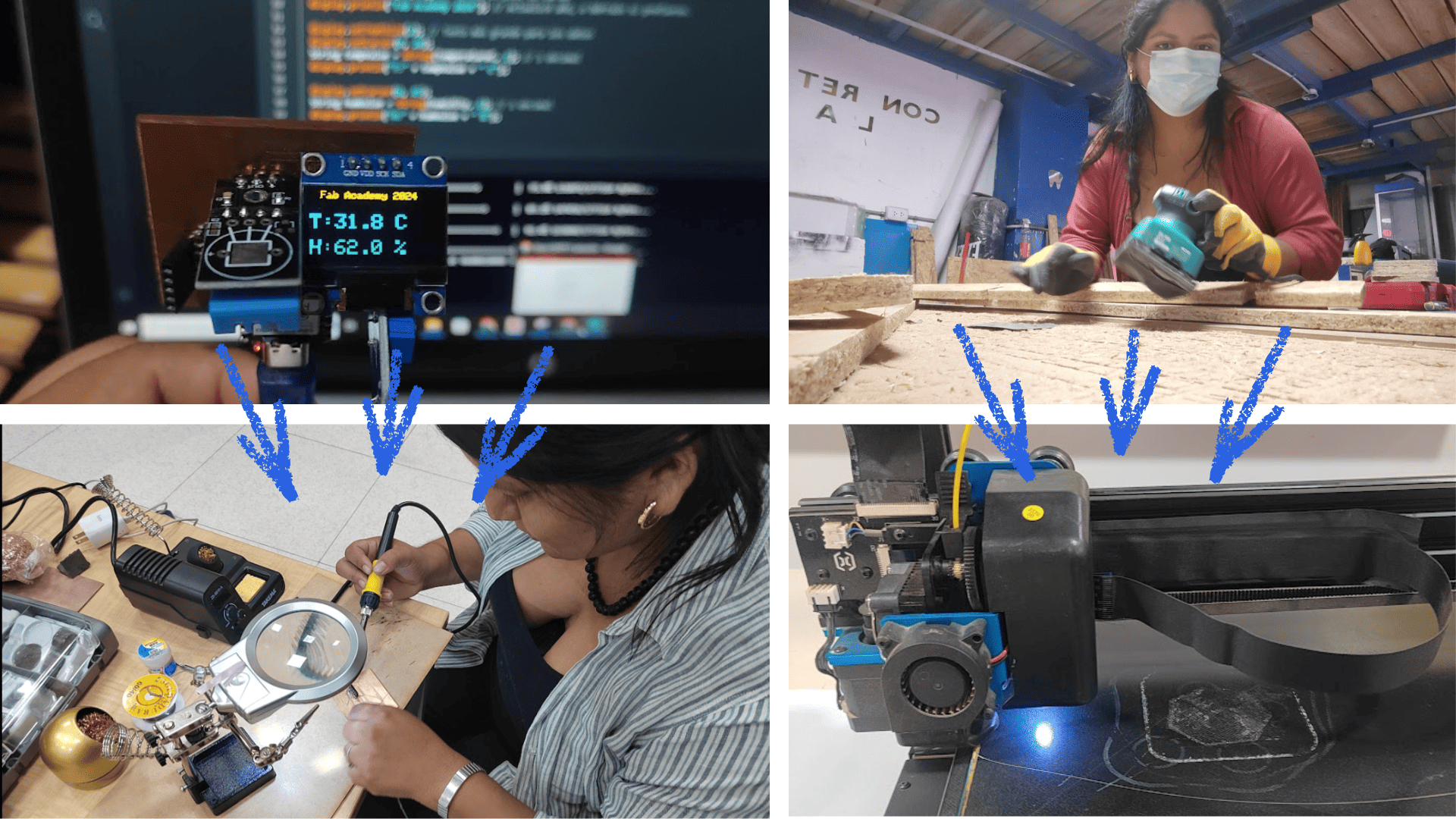
3D Printing
Fabrication of custom parts such as sensor mounts, cable organizers, battery holders, electronic enclosures, and structural accessories.
Subtractive Manufacturing
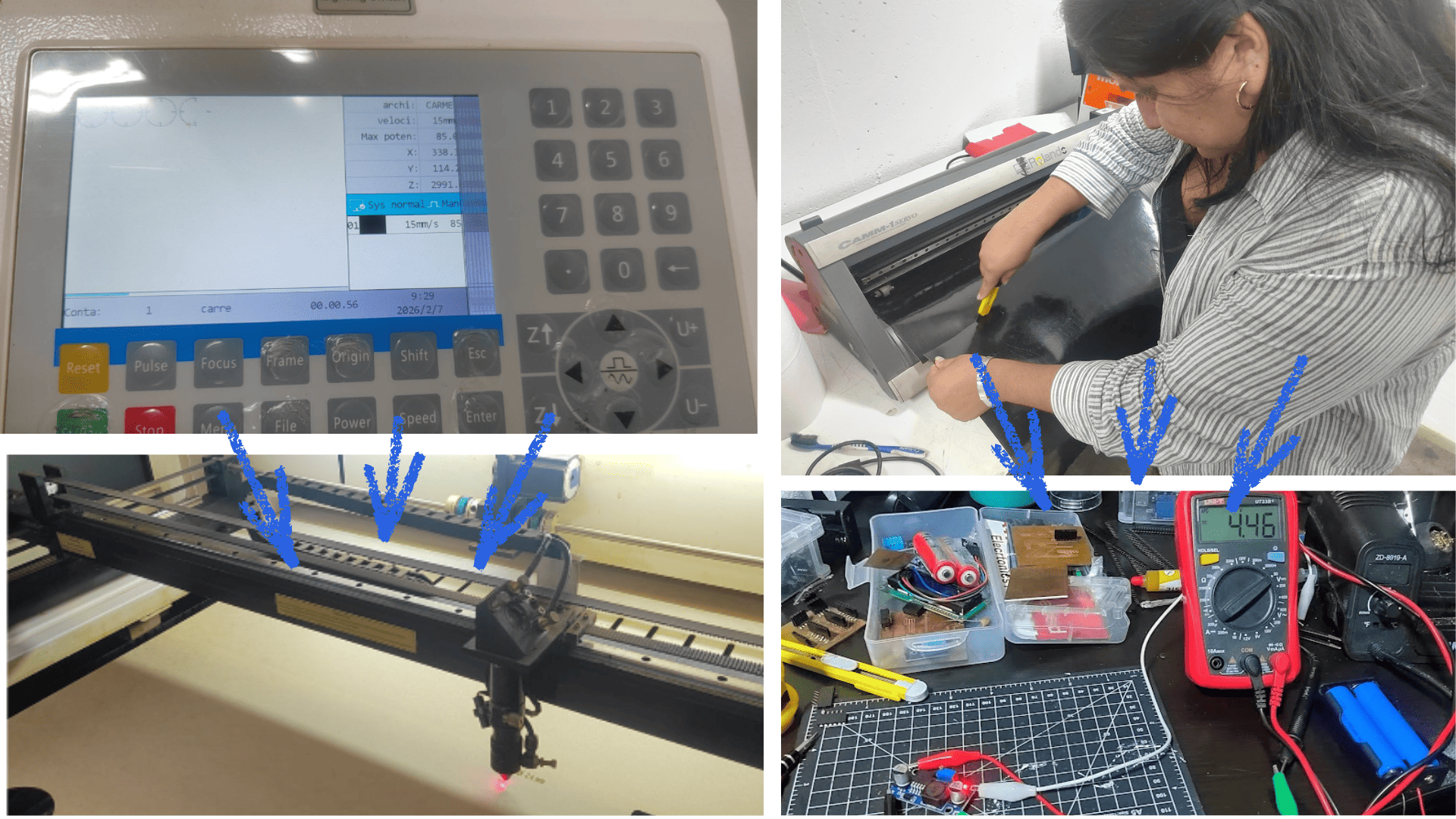
Laser Cutting
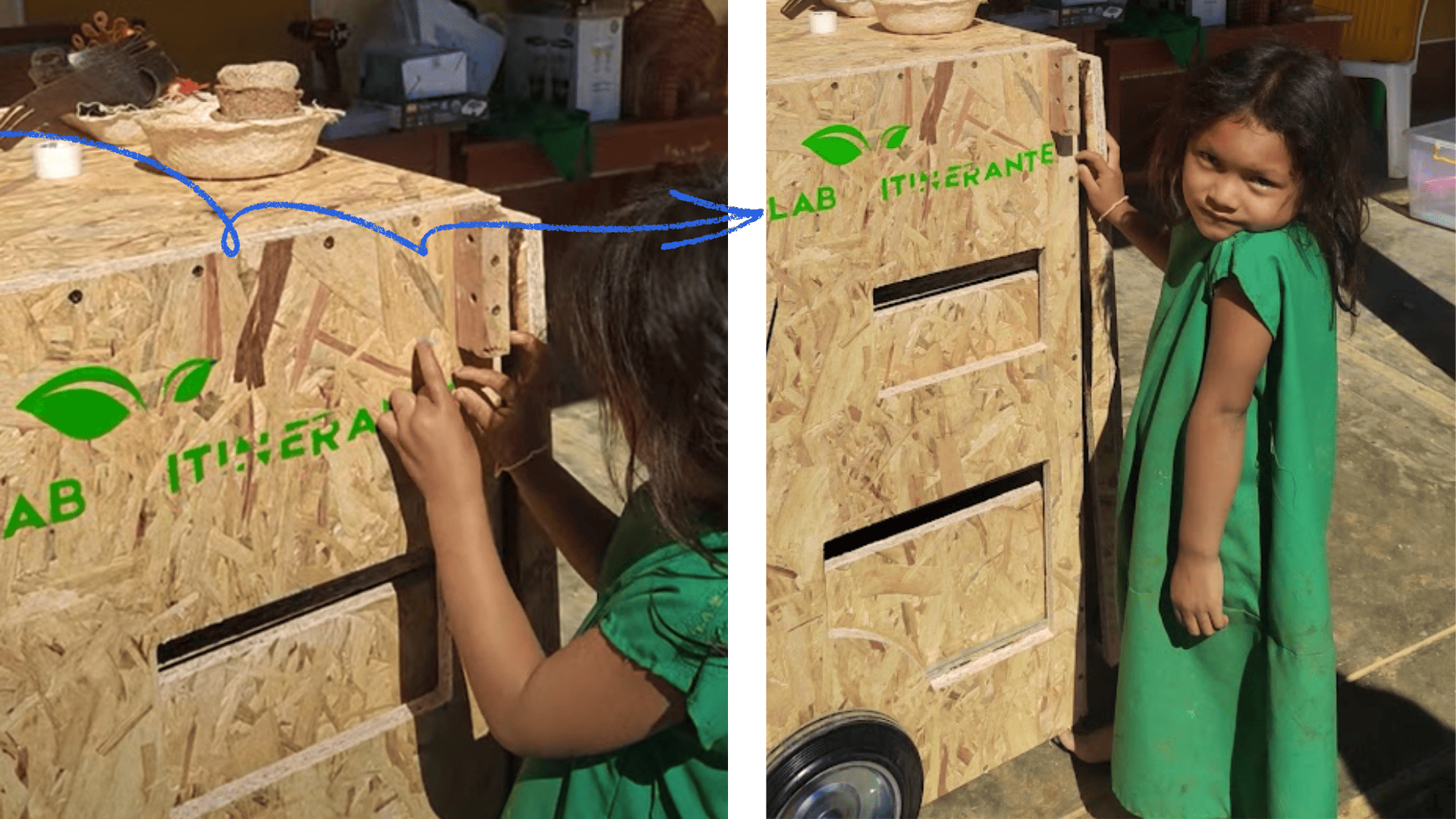
Production of labels, signage, organizational components, templates, and lightweight structural elements.
Subtractive Manufacturing
CNC Routing
Fabrication of the main furniture structure, foldable workspace, storage compartments, and durable load-bearing components.
Electronics
PCB Milling
Manufacturing of the custom electronic board used for sensor integration, communication, and power distribution.
Electronics
Electronic Design
Integration of temperature, humidity, and light sensors, OLED display, rechargeable battery, solar charging system, and voltage regulator.
Electronics
PCB Assembly and Soldering
Assembly and soldering of electronic components including connectors, sensors, microcontroller, resistors, and power modules.
Programming
ESP32-C3 Programming
Development of firmware for environmental monitoring, data processing, OLED visualization, and system management.
Programming
Sensor Communication
Implementation of real-time monitoring of temperature, humidity, and ambient light conditions.
Programming
Web Platform Integration
Transmission and storage of environmental data to support biomaterial and biopolymer research through the Regen.now platform.
Environmental Monitoring
Data Collection and Analysis
Collection of temperature and humidity data required for biomaterial and biopolymer experiments, generating information for future material development.
Renewable Energy
Solar Energy Integration
Implementation of solar panels, rechargeable batteries, and voltage regulation systems to provide autonomous energy in remote locations.
System Integration
Mechanical Integration
Assembly of all structural elements to create a portable, foldable, and durable laboratory suitable for field deployment.
System Integration
Electronic Integration
Connection of sensors, displays, power systems, PCB, and communication modules into a single operational platform.
Community Integration
Participatory Design and Validation
Collaboration with local communities to validate the design and ensure it responds to real needs related to transportation, technology access, renewable energy, and education.
Programming
#include <Wire.h>
#include <Adafruit_GFX.h>
#include <Adafruit_SSD1306.h>
#include <DHT.h>

#define OLED_RESET -1
Adafruit_SSD1306 display(128, 64, &Wire, OLED_RESET);

const int DHTPIN = 21;
#define DHTTYPE DHT11

DHT dht(DHTPIN, DHTTYPE);

void setup() {

  Serial.begin(115200);

  Wire.begin();

  if(!display.begin(SSD1306_SWITCHCAPVCC, 0x3C)) {
    Serial.println(F("SSD1306 allocation failed"));
    for(;;);
  }

  display.display();
  delay(2000);
  display.clearDisplay();

  dht.begin();

  Serial.println("Initialization complete.");
}

void loop() {

  delay(2000);

  float humidity = dht.readHumidity();
  float temperatureC = dht.readTemperature();

  if (isnan(humidity) || isnan(temperatureC)) {

    Serial.println("Error reading DHT11 sensor.");

    display.clearDisplay();
    display.setCursor(0,0);
    display.print("Sensor Error!");
    display.display();

    return;
  }

  Serial.print("Temp: ");
  Serial.print(temperatureC);
  Serial.print(" C | Hum: ");
  Serial.print(humidity);
  Serial.println("%");

  display.clearDisplay();

  display.setTextSize(1);
  display.setTextColor(WHITE);
  display.setCursor(10, 0);
  display.println("FabLab Itinerante");

  display.setTextSize(2);

  display.setCursor(0, 20);
  String tempValue = String(temperatureC, 1);
  display.println("T:" + tempValue + " C");

  display.setCursor(0, 45);
  String humValue = String(humidity, 1);
  display.println("H:" + humValue + " %");

  display.display();
}
What Questions Need to Be Answered?
Key Questions
How Will the Project Be Evaluated?
Summary Slide and Video
Summary Slide (Placeholder)
Summary Video
Development Summary
Reflection