Assignment Requirements
Applications and Implications
- Develop a plan for dissemination of your final project..
- Complete your final project, tracking your progress.
Assignment Requirements
Learning outcomes
- Develop a plan to share your work.
- Formulate future opportunities and/or development for your final project.
- Summarise and communicate the essence of your project development.
Have you answered these questions?
- Created a dissemination plan for your final project.✅
- Outlined future possibilities and described how to make them probabilities.✅.
- What tasks have been completed, and what tasks remain?.✅.
- What's working? what's not?.✅.
- What questions need to be resolved?.✅.
- Planned what will happen when?.✅.
- What have you learned?.✅.
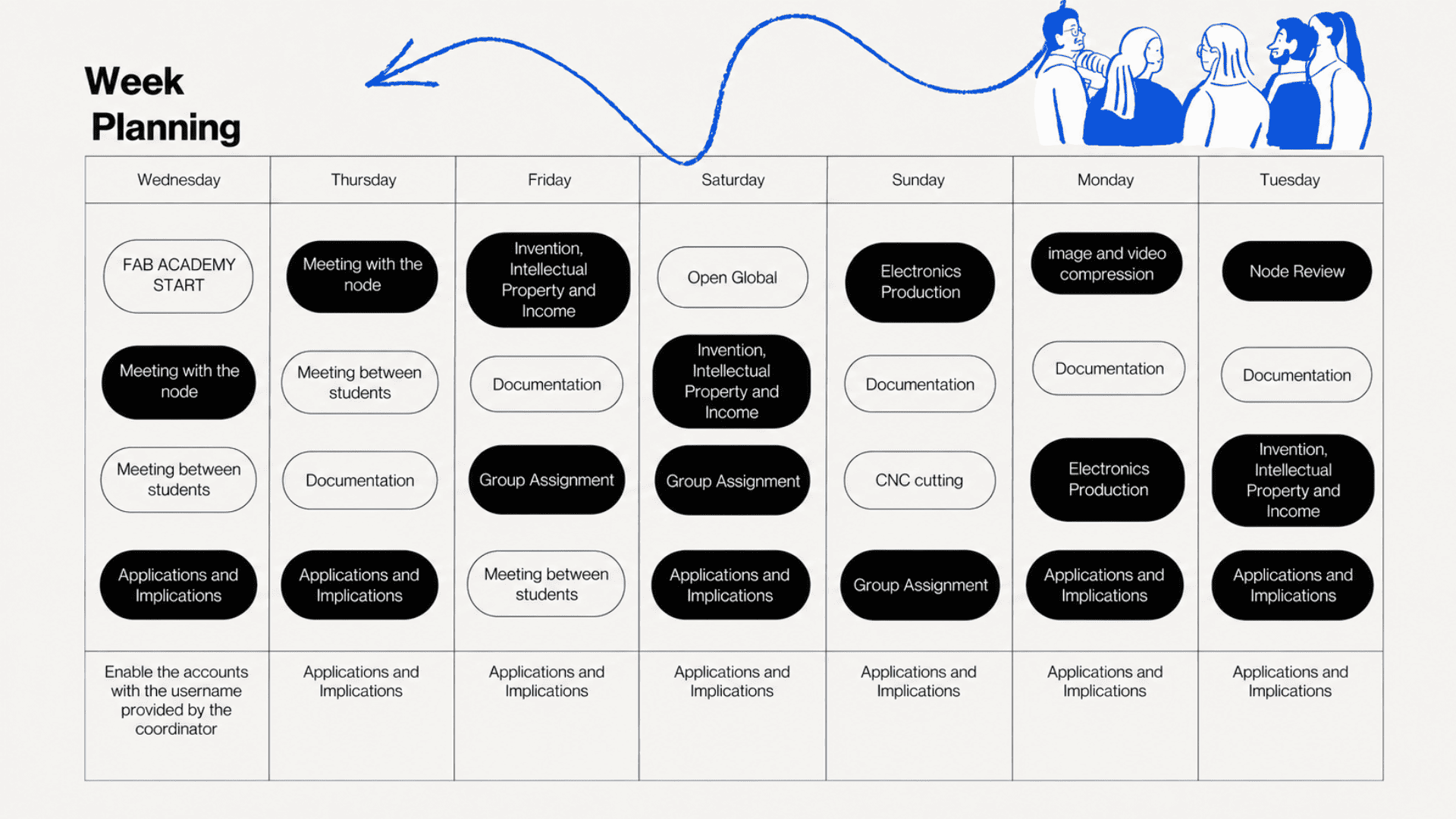
Weekly planning
This week, the focus will be on advancing the development of the mobile biofabrication laboratory prototype and integrating its different components. Work will continue on the fabrication and assembly of the structure, as well as the testing of bio-based materials and electronic systems.
Additionally, efforts will be dedicated to documenting the project, refining the design, and preparing the elements needed for the final integration. The goal is to ensure that all components function together effectively while supporting the project's objectives of sustainability, community collaboration, and knowledge exchange.
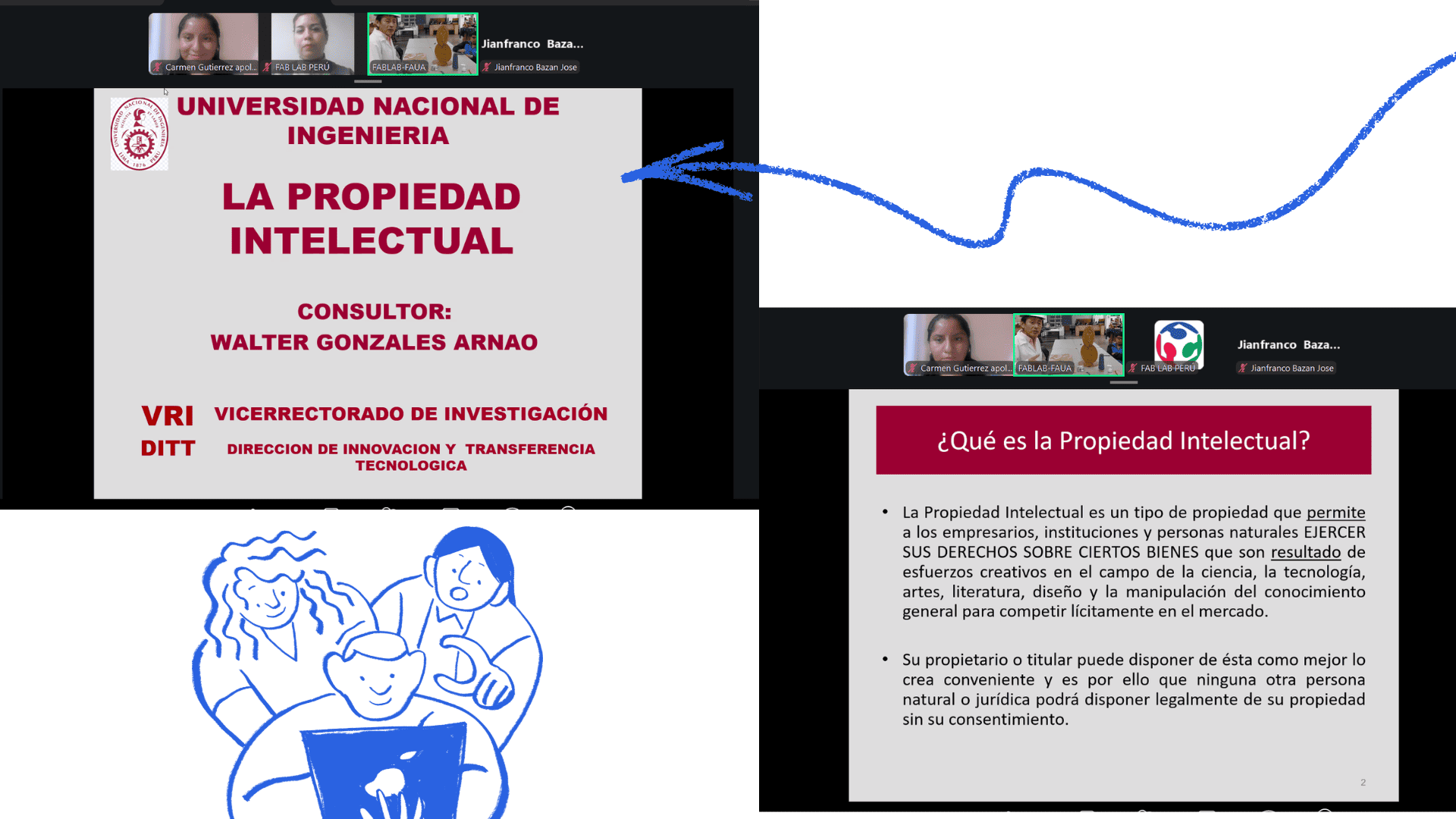
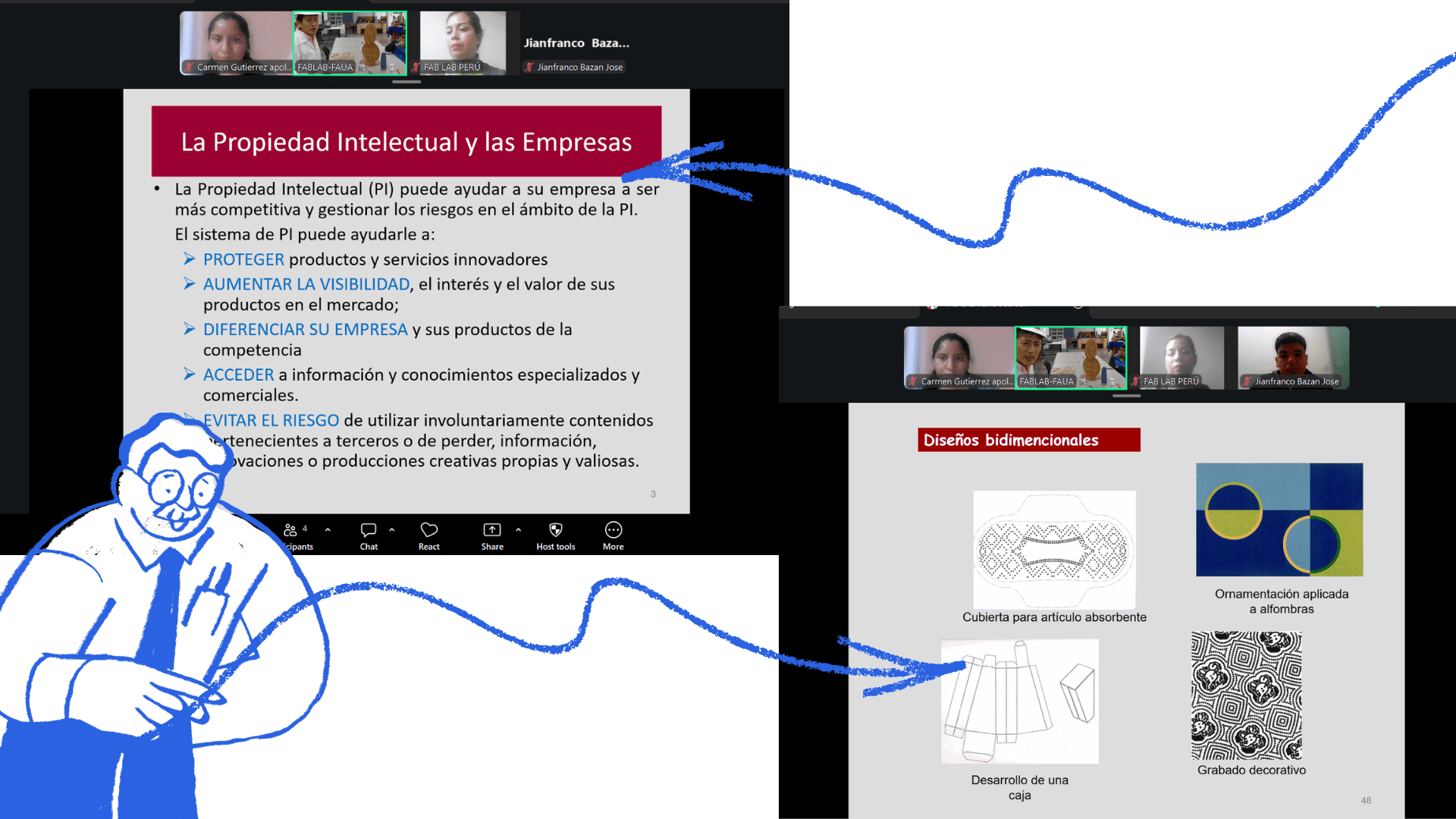
For the topic “Invention, Intellectual Property and Income”, we had the opportunity to attend a presentation by Walter Gonzales, an intellectual property specialist and member of Fab Lab UNI. During his talk, he introduced the fundamental concepts of intellectual property, including trademarks, slogans, and the importance of protecting creative and innovative work.
This session encouraged us to reflect on how intellectual property can be integrated into our own projects by identifying elements that can be protected and strengthened, such as product design, packaging, brand identity, colors, icons, and other visual assets. It also helped us understand the importance of developing projects with a unique identity that effectively communicate their value, stand out in the market, and create opportunities for future growth and impact.
Introduction: Invention, Intellectual Property and Income
Video
Project License, Author Statement, and Future Development
Project License
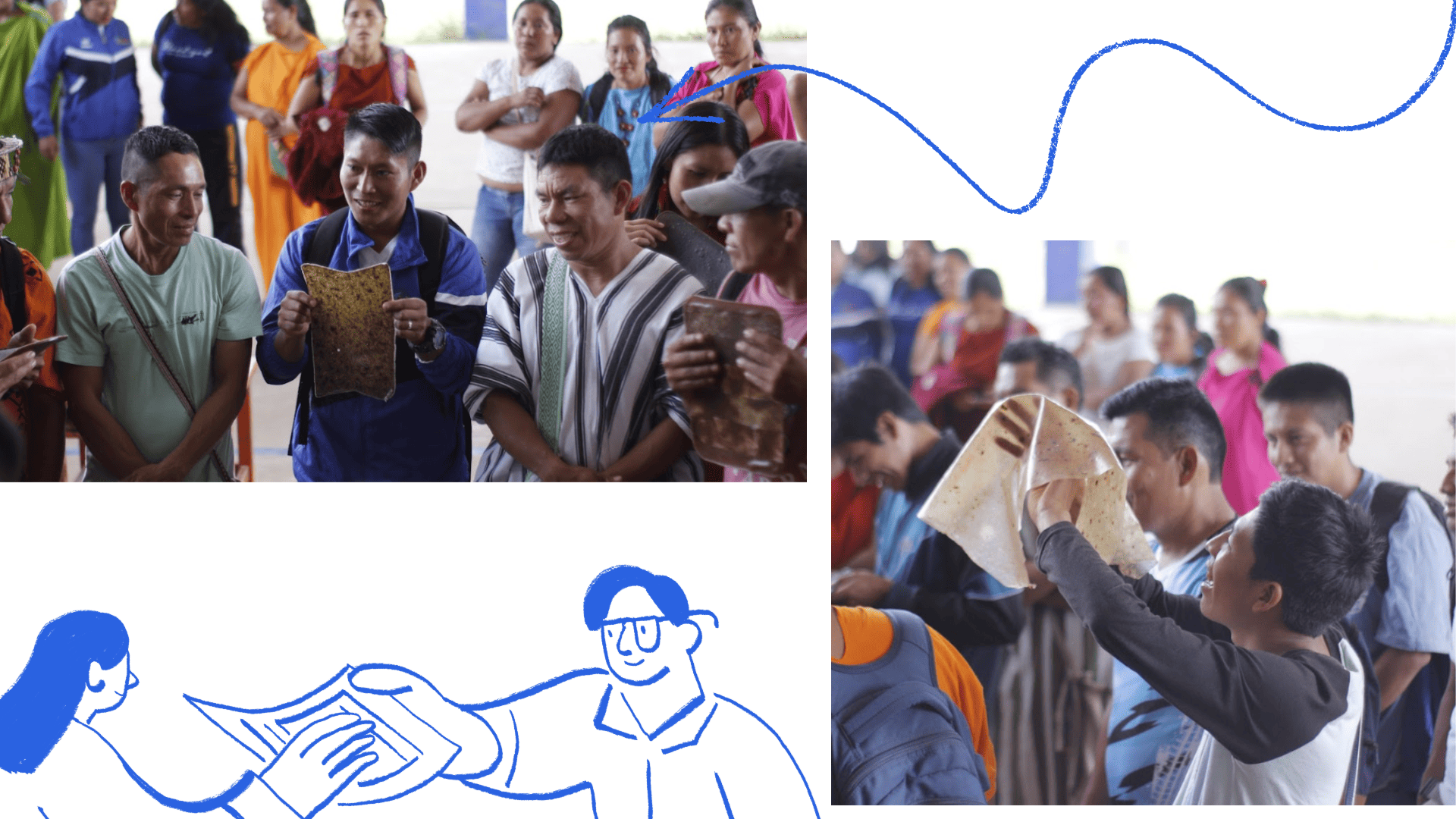
The Mobile Fab Lab is a project developed under the principles of open knowledge, collaborative innovation, and respect for cultural diversity. Its purpose is to promote the exchange of knowledge, creativity, and technology across different territories while strengthening the dialogue between digital fabrication, biofabrication, and the ancestral knowledge of rural and Indigenous communities in the Peruvian Amazon.
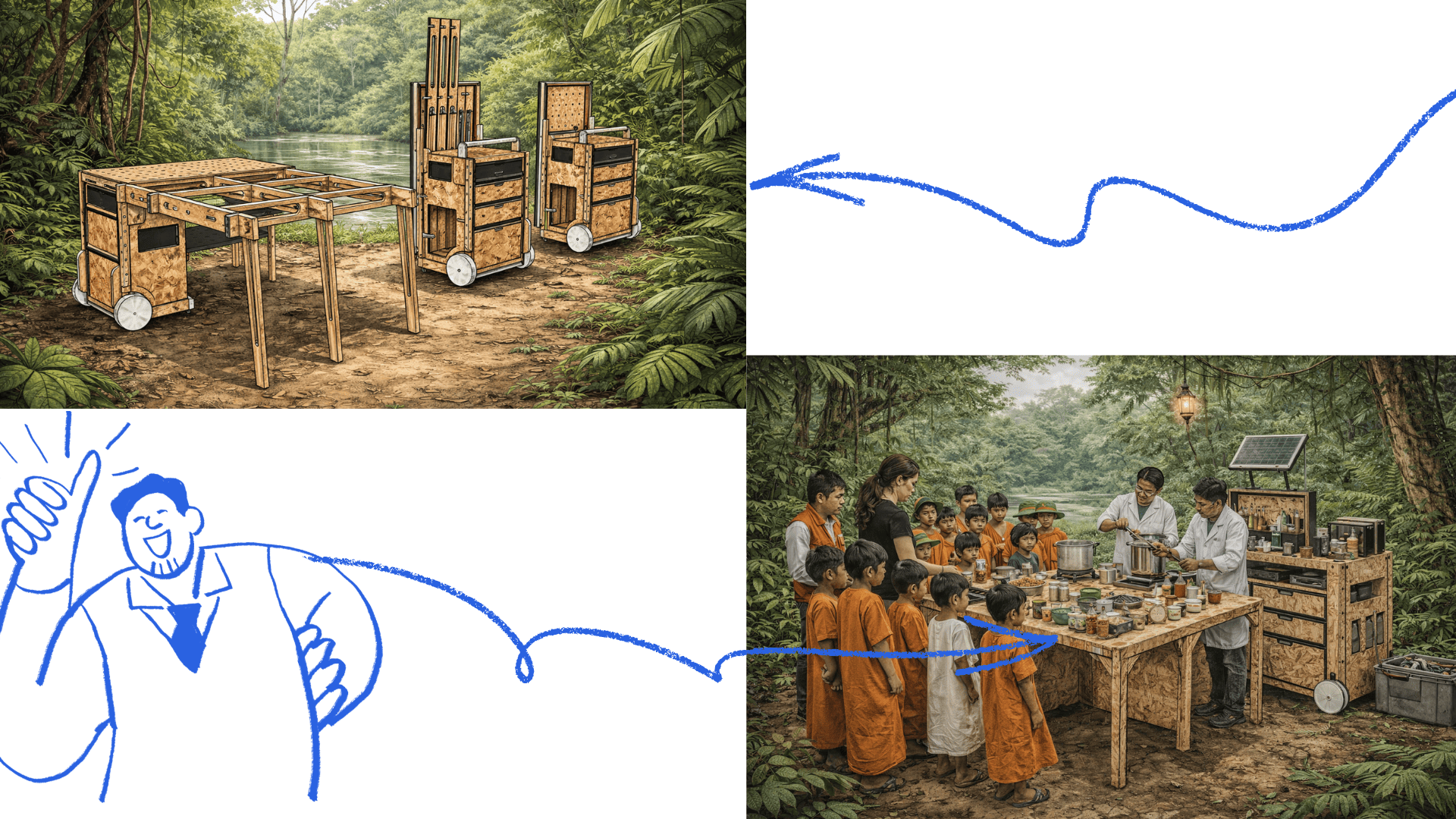
The project consists of a mobile learning and experimentation unit designed to bring digital fabrication tools, renewable energy systems, and co-creation methodologies to communities with limited access to technological infrastructure. Through participatory workshops, the project encourages the development of sustainable solutions based on local resources, waste valorization, and the preservation of traditional knowledge related to natural pigments, iconography, Indigenous languages, biodiversity, and cultural practices.
Following the open-source philosophy promoted by Fab Academy, the project allows anyone to study, replicate, adapt, and improve both its designs and methodologies, provided that the original authors are credited and all modifications are properly documented. This approach strengthens collaboration, transparency, and the collective construction of knowledge.
The project is released under the Creative Commons Attribution–NonCommercial–ShareAlike 4.0 International (CC BY-NC-SA 4.0) license, allowing the use, adaptation, and distribution of the work for non-commercial purposes, provided that appropriate credit is given and derivative works are shared under the same license.
The complete documentation will be publicly available through the Fab Academy platform, enabling students, researchers, educators, designers, makers, and communities worldwide to learn from, adapt, and replicate the project.
Author Statement
This project is shared with the purpose of contributing to open knowledge, promoting collective learning, and fostering social innovation through an ethical and collaborative approach.
Others are encouraged to share, adapt, and build upon this work for non-commercial purposes, provided that proper credit is given to the original authors and any derivative work is distributed under the same license terms.
Restrictions
The project, its documentation, and its outcomes may not be used for commercial purposes without the explicit authorization of the authors and consideration of any agreements established with participating communities.
Share Alike
Any adaptation, improvement, or derivative work must be distributed under the same license to ensure that knowledge remains accessible to future generations of makers, researchers, educators, and communities.
License Terms
- Attribution (BY)
- NonCommercial (NC)
- ShareAlike (SA)
License: Creative Commons Attribution–NonCommercial–ShareAlike 4.0 International (CC BY-NC-SA 4.0).
Stakeholders and Entities Involved
The development of the Mobile Fab Lab involves multiple stakeholders working across different fields of knowledge:
- Rural and Indigenous communities as holders and transmitters of ancestral knowledge.
- Designers, architects, and digital fabricators responsible for creating solutions adapted to the Amazonian context.
- Researchers and educators exploring the intersection of technology, sustainability, and cultural heritage.
- Fab Lab and Fab Academy community members, including students, makers, and professionals.
- Biofabrication and circular economy specialists promoting sustainable resource use and local innovation.
The collaboration among these stakeholders enables the creation of contextualized, sustainable, and culturally respectful solutions.
Communication and Dissemination Channels
- Fab Academy Website: Complete technical documentation, design files, methodologies, and project development.
- Social Media: Sharing field experiences, workshops, prototypes, and community activities through photos and videos.
- Exhibitions and Academic Events: Presenting the project at maker fairs, design exhibitions, conferences, and innovation events.
- Fab Lab Networks: Connecting with global communities interested in digital fabrication, sustainability, and open innovation.
Future Opportunities and Development
Although the project is currently shared under a non-commercial license, several opportunities exist for expanding its impact and long-term sustainability.
- Development of specialized versions adapted to educational, productive, or community contexts.
- Creation of training programs in digital fabrication, biofabrication, and circular economy practices.
- Development of educational kits and open learning methodologies.
- Partnerships with universities, NGOs, public institutions, and international cooperation organizations.
- Access to innovation, sustainability, cultural preservation, and community development funding programs.
- Consulting and technical support services related to co-creation, biofabrication, and community innovation.
- Potential future commercial versions developed through ethical agreements that respect community rights and shared knowledge.
For now, the project remains open for learning, research, experimentation, and knowledge exchange within the global Fab Lab and open innovation communities.
Why Was This License Chosen?
The Creative Commons Attribution–NonCommercial–ShareAlike 4.0 International license was selected because it balances open access to knowledge with the protection of the project's values and objectives.
- Allows free access to documentation and project outcomes.
- Prevents unauthorized commercial exploitation.
- Ensures that improvements and adaptations remain openly accessible.
- Encourages collaboration and knowledge sharing.
- Supports the ethical protection of ancestral knowledge shared during co-creation processes.
- Promotes a global community committed to open innovation and sustainable development.
Project Reflection
What Works and What Does Not?
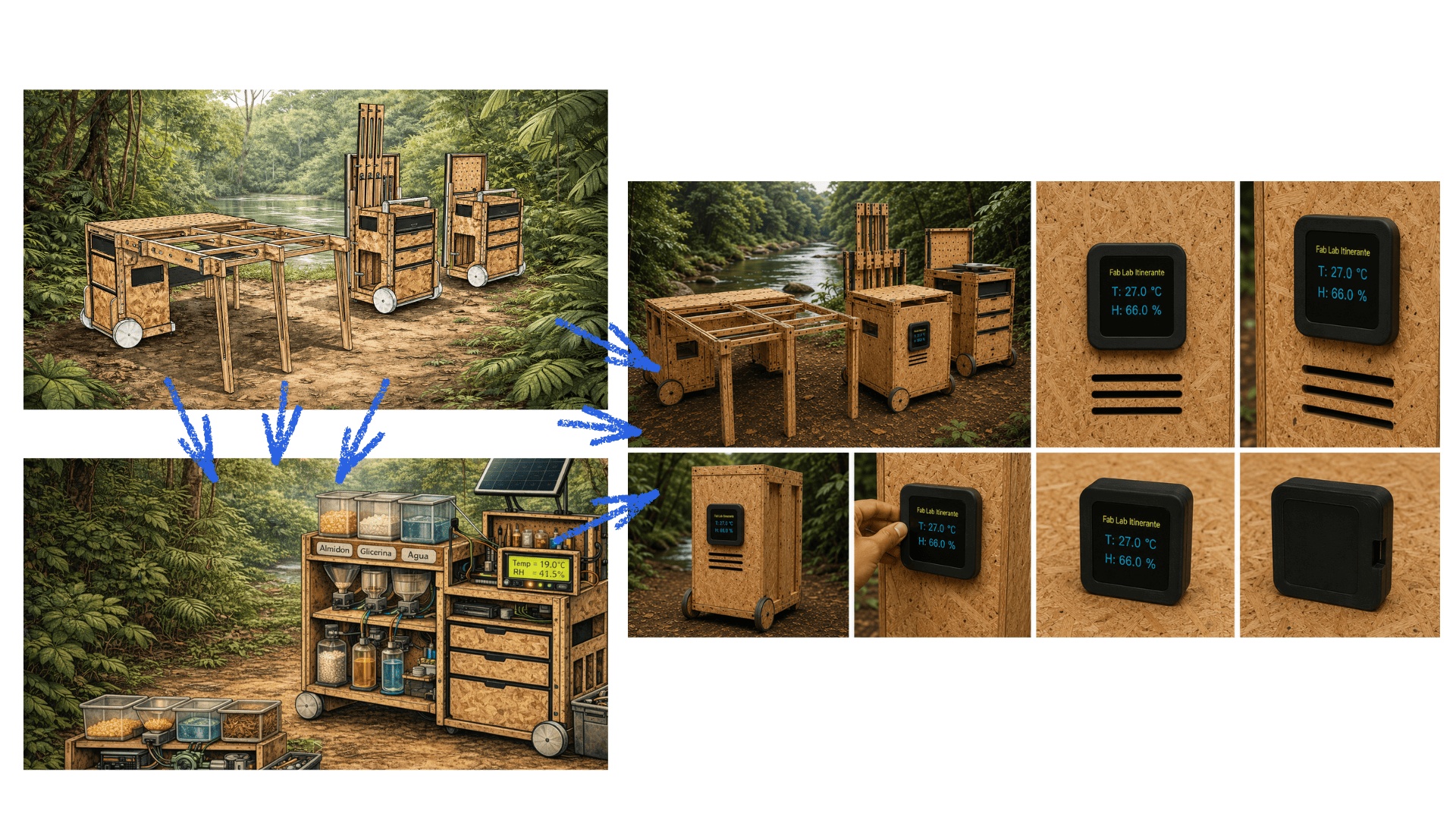
During the development process, the main electronic board was redesigned and optimized to improve efficiency and reliability while maintaining the essential system components. Significant progress was also made in integrating the mobile furniture unit, solar energy system, and technological tools that make up the laboratory.
However, challenges remain regarding full system integration, durability under Amazonian environmental conditions, and ongoing validation of the prototype in real-world scenarios.
Questions to Be Resolved
- How can the long-term sustainability and maintenance of the laboratory be ensured in remote communities?
- How can ancestral knowledge shared during co-creation processes be properly documented and protected?
- What strategies can strengthen community ownership and technological appropriation?
- How can the model be replicated in other territories with similar characteristics?
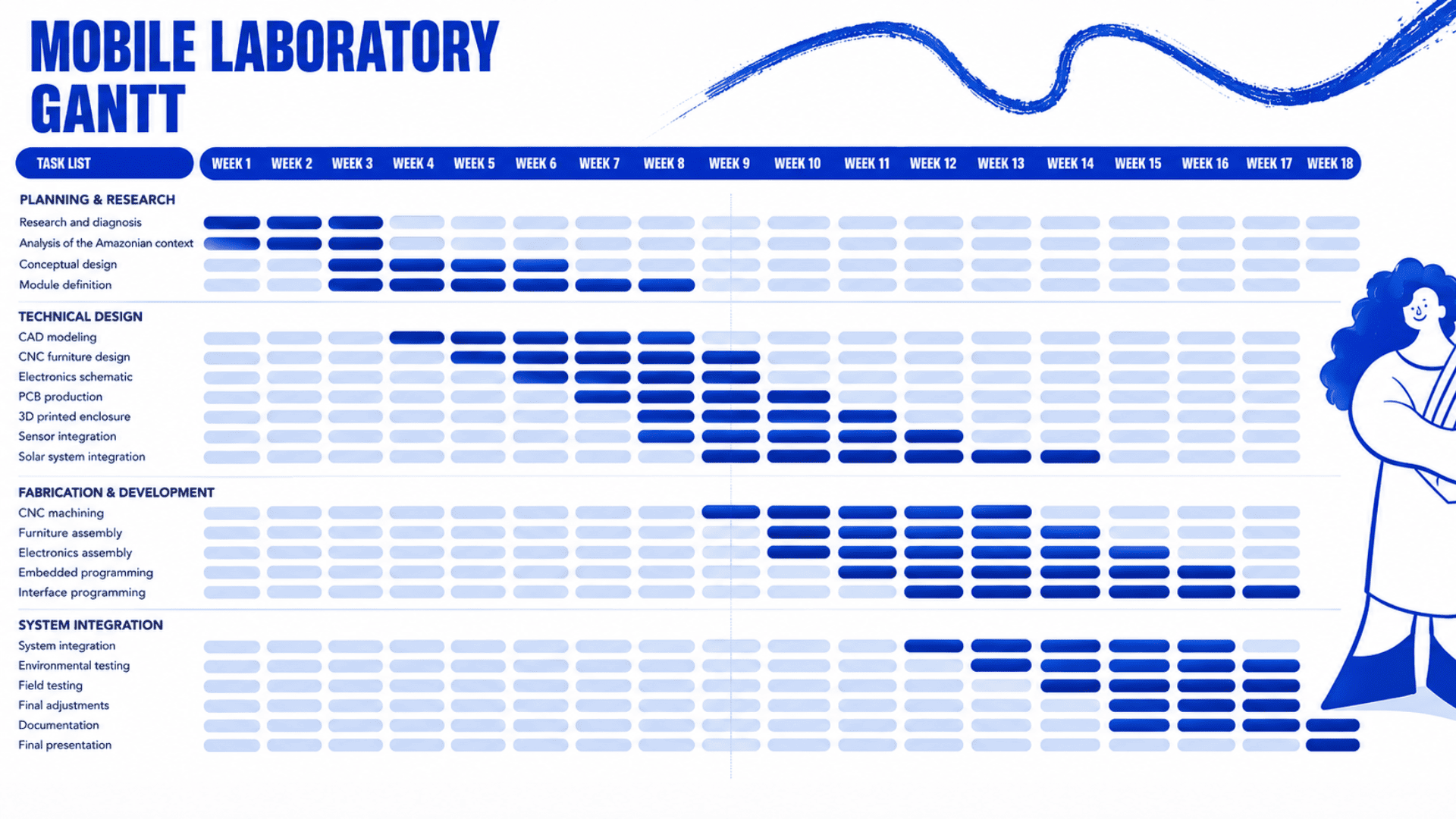
Planned Development Phases
- Co-creation and participatory diagnosis with communities.
- Design, fabrication, and improvement of physical and technological components.
- Implementation and validation through workshops and field testing.
- Open documentation and continuous improvement based on lessons learned.
- Scaling and impact expansion to new communities and territories.
What Have I Learned?
This project has allowed me to integrate and apply the tools, methodologies, and knowledge acquired throughout Fab Academy. I have strengthened my skills in computational design, digital fabrication, electronics, programming, documentation, and functional prototyping.
More importantly, I have learned that technological innovation becomes far more meaningful when developed collaboratively, respecting local knowledge and promoting co-creation processes with communities. This experience demonstrates that technology can become a powerful tool for education, sustainability, cultural preservation, and territorial development when built through participation and mutual respect.
Personal Reflection on Intellectual Property
Before exploring this topic, I mainly associated intellectual property with patents, trademarks, and copyrights. Throughout this learning process, however, I came to understand that intellectual property also involves an ethical responsibility to recognize, protect, and respect the knowledge that individuals and communities have developed and transmitted over generations.
In the development of my Mobile Fab Lab project, this reflection became especially important because the project is based on collaboration with communities that hold ancestral knowledge related to natural materials, pigments, biodiversity, languages, iconography, and cultural practices. This led me to reflect on how these forms of knowledge can be integrated into innovation processes without being appropriated or taken out of their cultural context.
I learned that intellectual property is not only about protecting individual creations but also about valuing collective knowledge and promoting fair and respectful forms of collaboration. It highlighted the importance of properly documenting processes, acknowledging the contributions of all participants, and ensuring that knowledge can be shared openly and responsibly.
This experience strengthened my belief that innovation should be built on respect, transparency, and co-creation. Technology and design can become powerful tools for empowering communities and preserving cultural heritage when the origins of knowledge are recognized and the benefits are shared in an equitable and ethical manner.