Week 18
Applications and Implications, Project Development
Contents
- Schedule / Weekly Plan
-
Individual assignment
- Applications and Implications
- Plan a final project masterpiece that integrates the range of units covered.
- Your project should incorporate:
- 2D and 3D design
- Additive and subtractive fabrication processes
- Electronics design and production
- Embedded microcontroller interfacing and programming
- System integration and packaging.
- Where possible, you should make rather than buy the parts of your project. Projects can be separate or joint, but need to show individual mastery of the skills, and be independently operable.
- Project Development
- Week questions / tasks
- Credits
On holidays from 1st to 17th May.
Individual assignment
Applications and Implications.
Plan a final project masterpiece that integrates the range of units covered, answering:
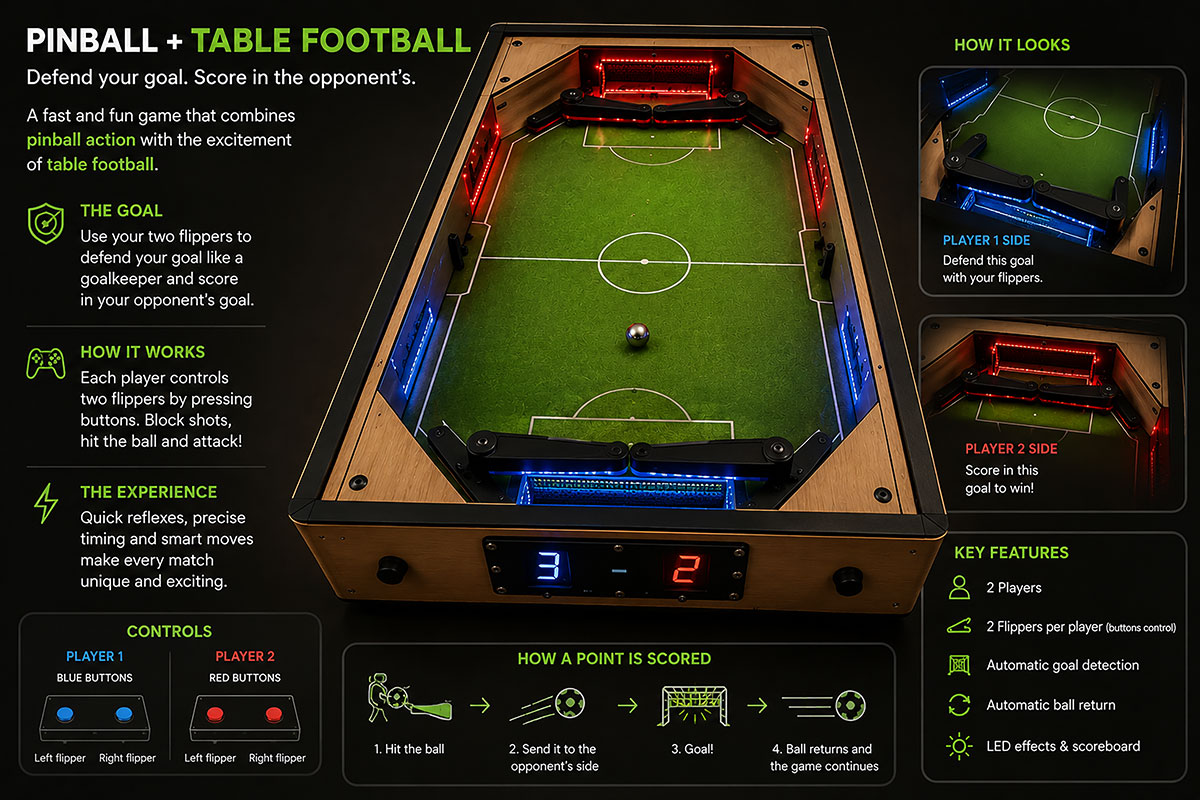
This project is a game that combines concepts from both a pinball machine and a table football game. The gameplay consists of scoring goals in the opponent’s goal using two flippers similar to those found in a pinball machine.
Each player controls two flippers acting as if they were a football goalkeeper’s hands, trying to defend their own goal while also attempting to send the ball toward the rival side and score.
The goal is to create a simple, fun, and engaging experience based on reflexes, timing, and player interaction.
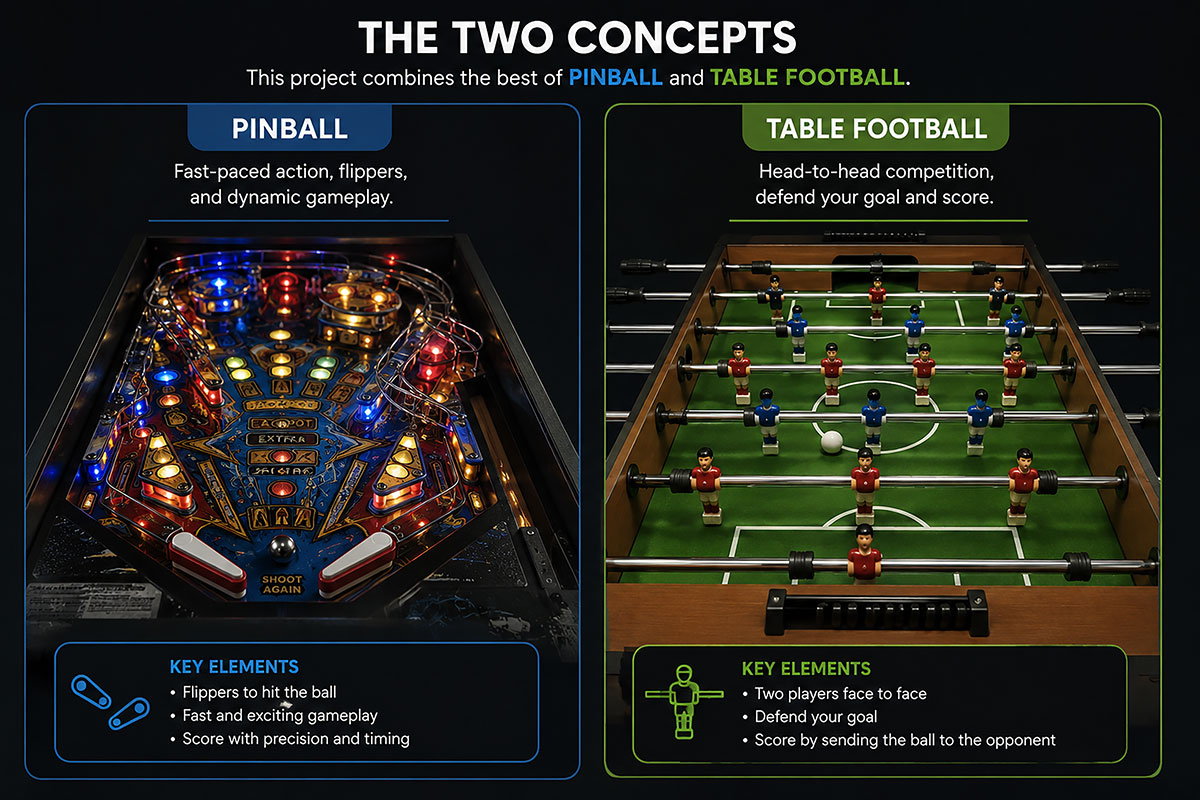
The main inspiration for this project comes from an arcade game I played when I was younger and that I have never seen again since then. Although pinball machines and table football games still exist today, that machine combined elements of both concepts in a different way and left a strong impression on me.
After deciding to develop this idea, I researched similar projects and found several examples of two-player pinball machines. However, I could not find any project combining a football field with two opposite goals and gameplay focused on defending and attacking using flippers.
Besides that initial inspiration, I also used references from existing pinball systems, football games, and different mechanical and electronic solutions discovered during the development process.
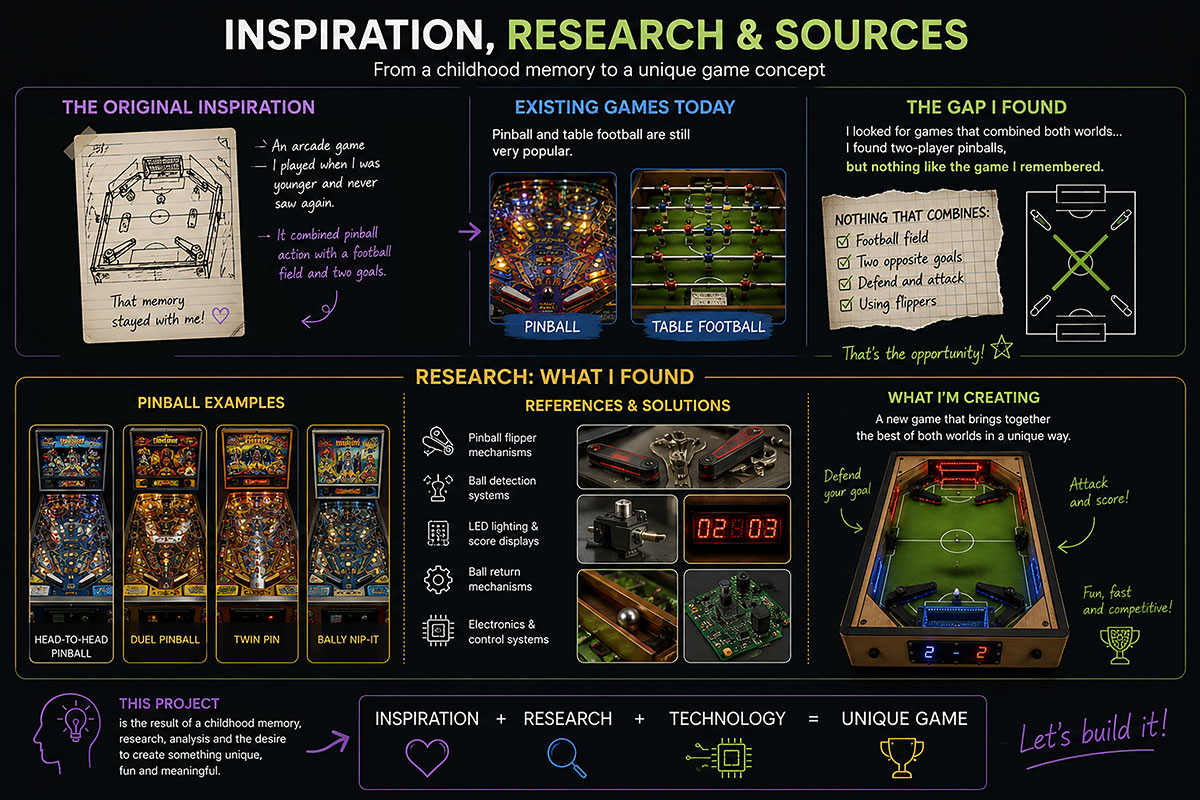
I will design all the main mechanical and electronic elements required for the project. This includes:
- Outer structure and chassis
- Playing field
- Goal detection system
- Game control logic
- Automatic ball return system
- Score display
- Lighting effects
I will also design the necessary PCBs, holders, and custom 3D printed parts required to integrate all the systems together.
Carboard model make on week 06
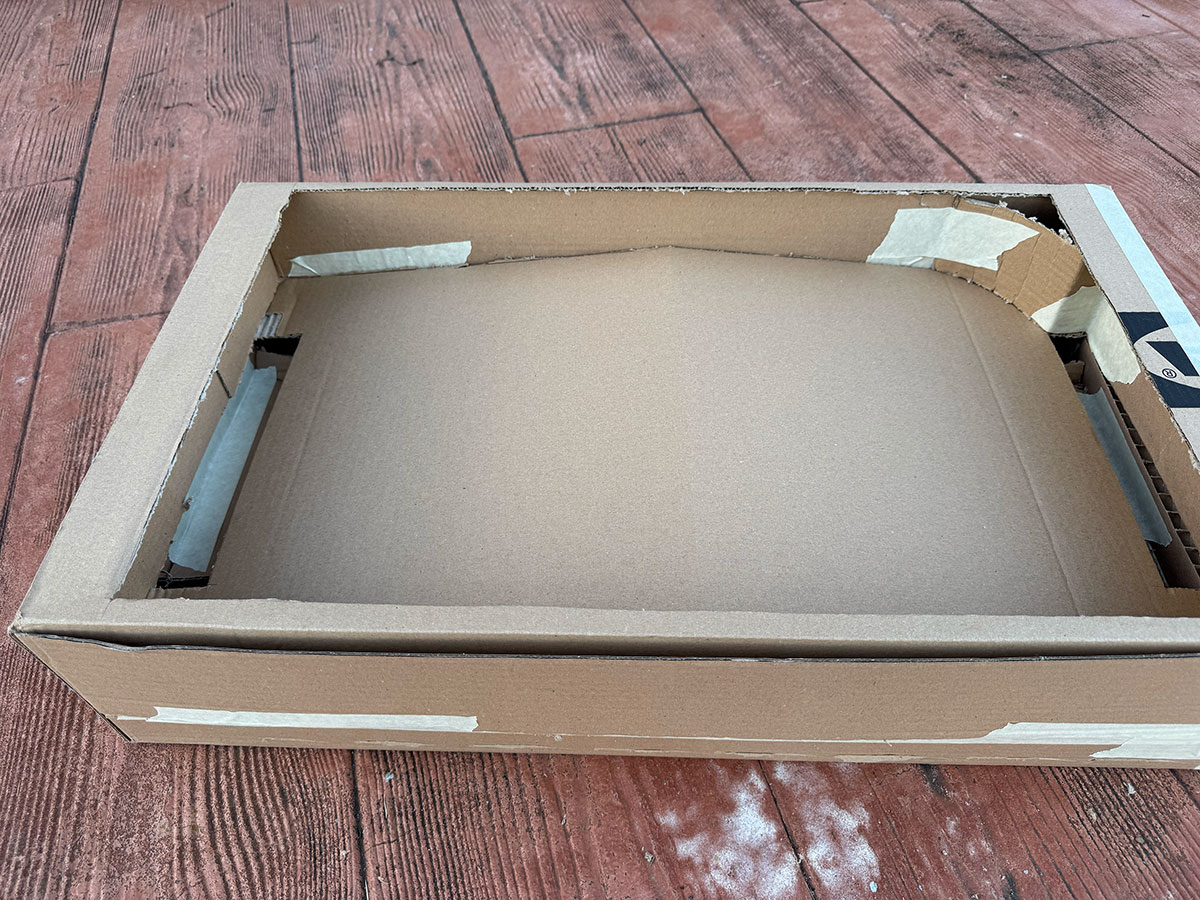
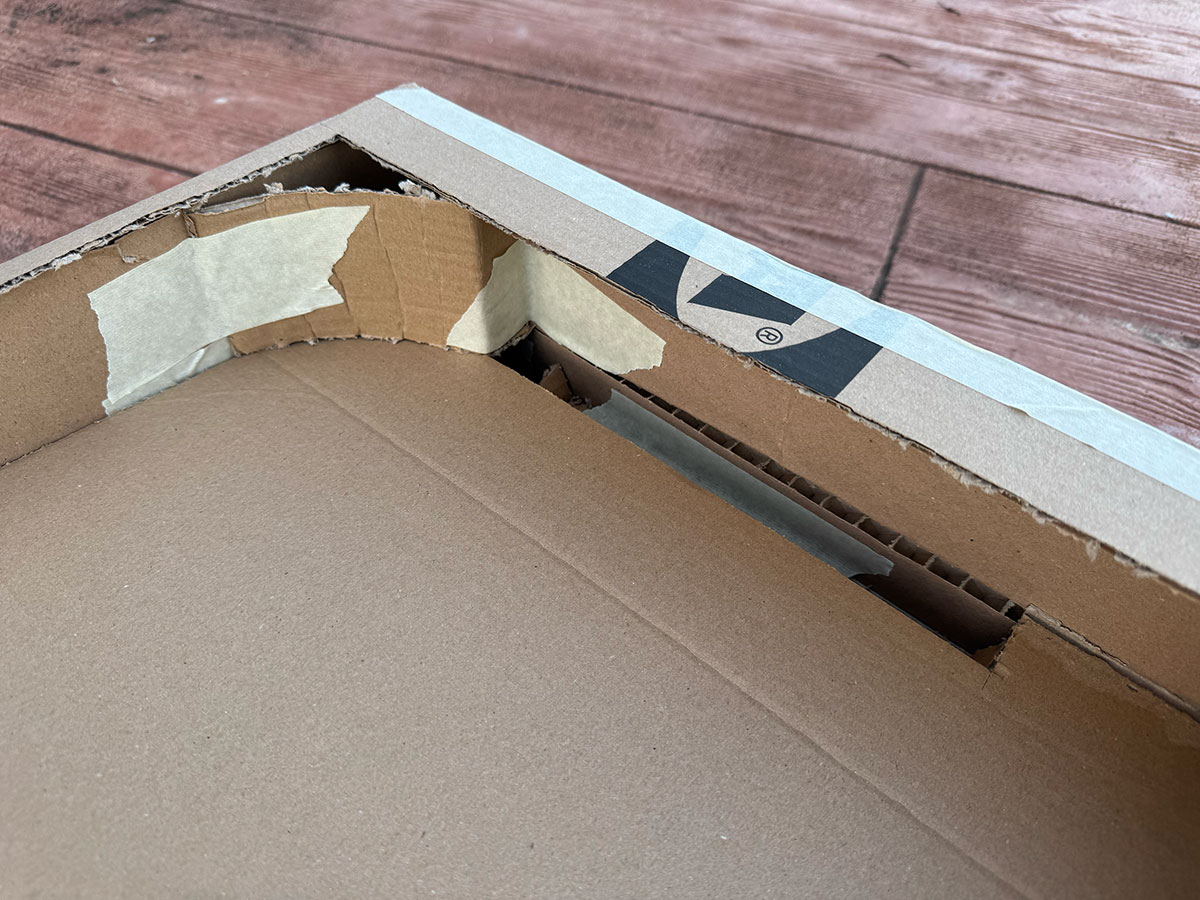
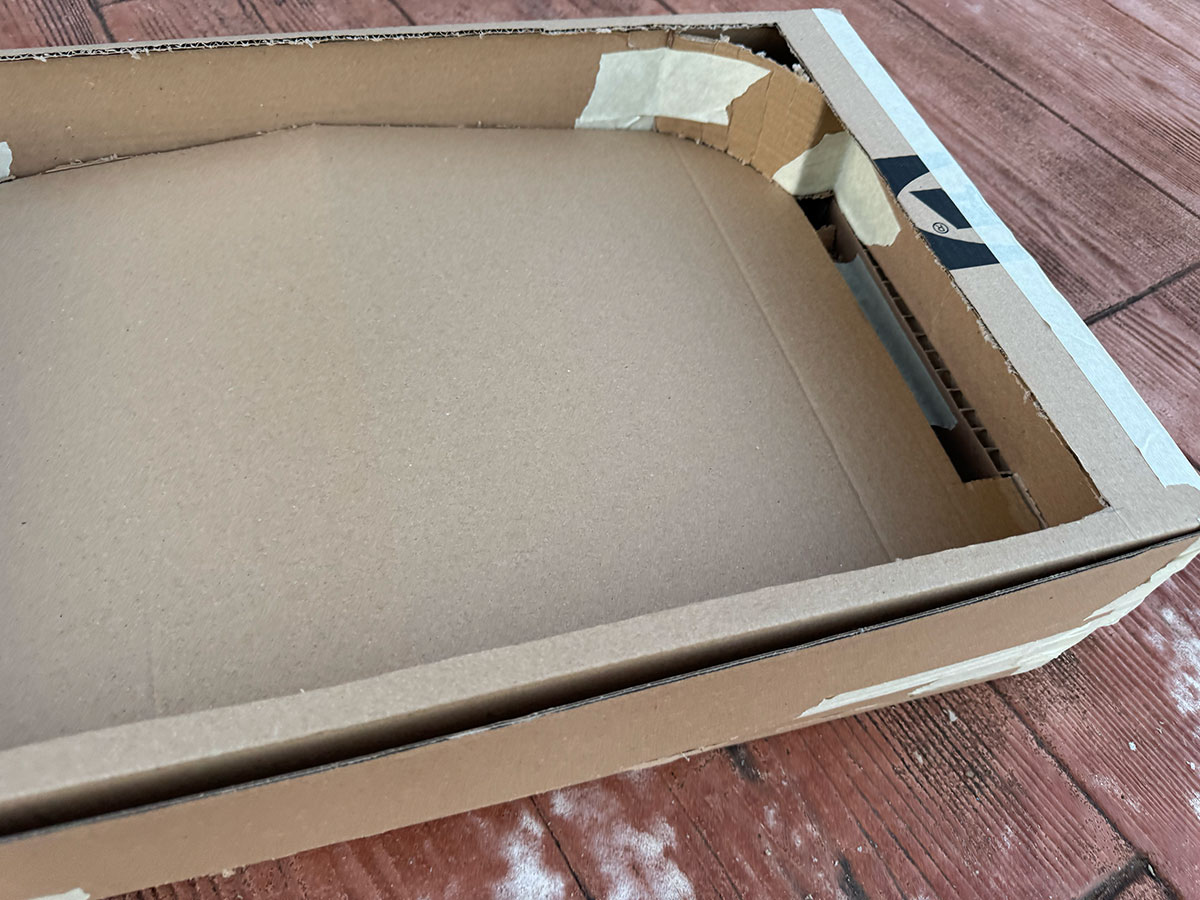
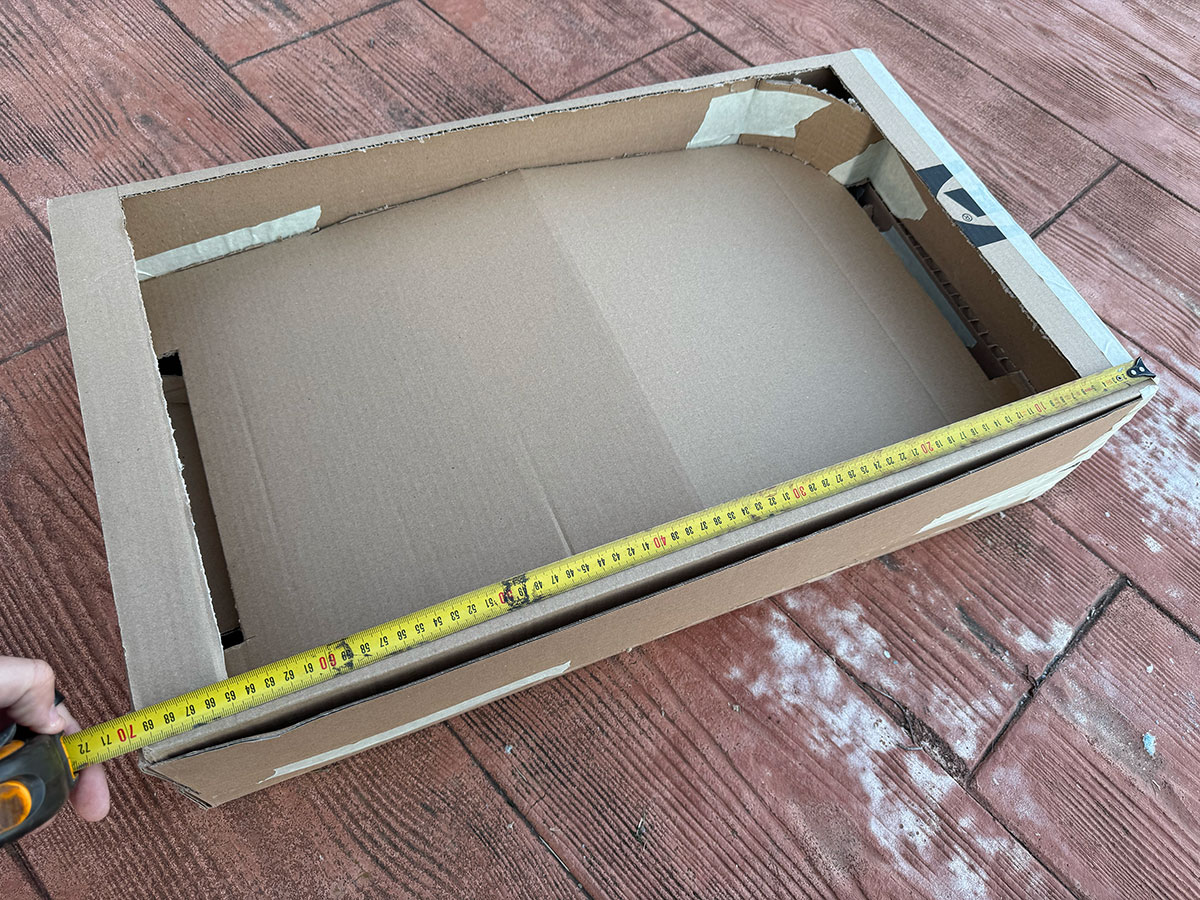
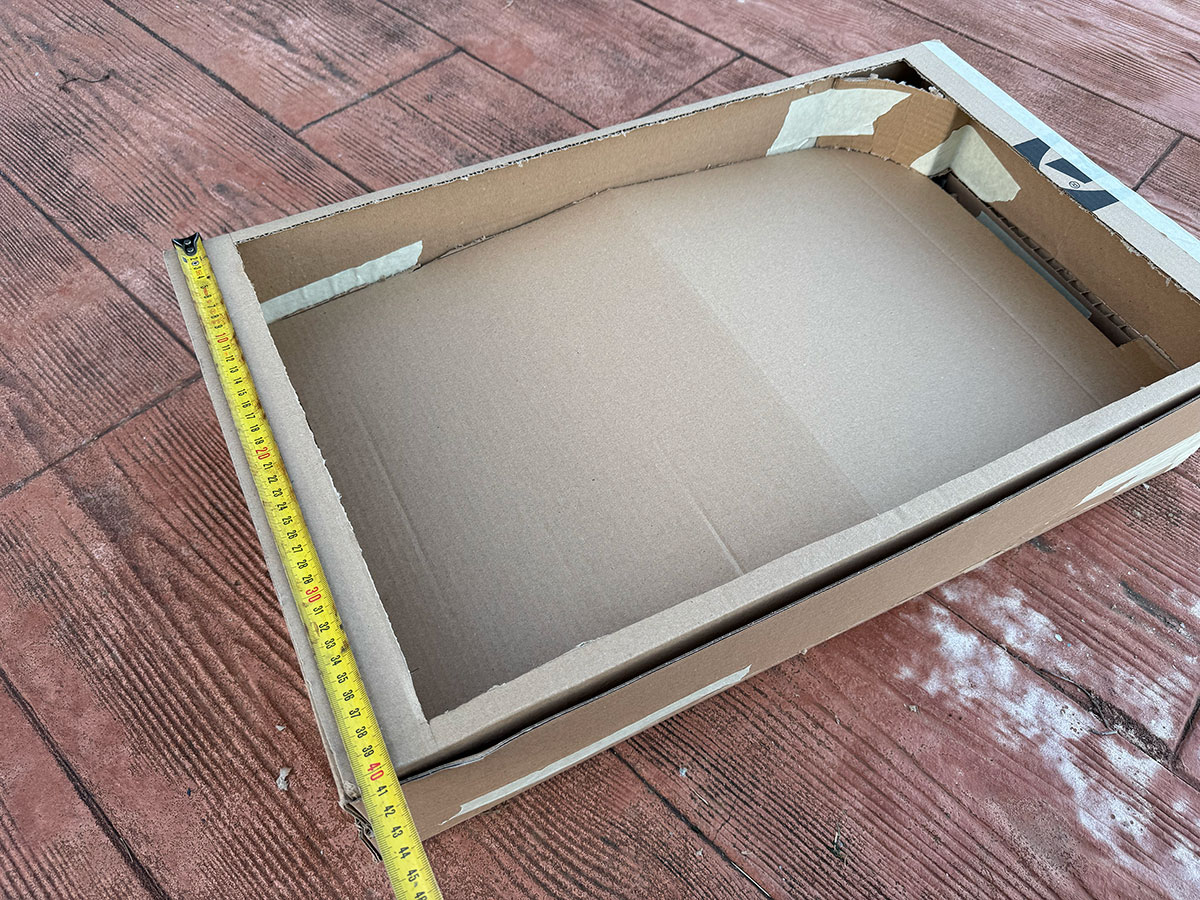
High quality video available on my YouTube channel ↗️.
During Week 16, I created a BOM (Bill of Materials) table where I listed all the materials and components used in the project, including their origin and estimated cost.
The main materials include wood and MDF for the structure, acrylic sheets for the playing field and decorative elements, electronic components such as microcontrollers, sensors, LEDs, servo motors, buttons, and several custom-made 3D printed parts.
The complete BOM table is reproduced below:
| No. | Item | Qty | Unit € | Unit $ | Total € | Total $ | Source | Link |
|---|---|---|---|---|---|---|---|---|
| Electronics | ||||||||
| 1 | Xiao ESP32C6 | 3 | 4.99 | Online | SeeedStudio | |||
| 2 | RGB LEDs stipe WS2812 5V 3m | 1 | 14.85 | Online | Bricogeek | |||
| 3 | Seimitsu Arcade button 24mm | 6 | 0.35 | Online | Aliexpress | |||
| 4 | IR reflectance sensor | 2 | 1.04 | Online | Aliexpress | |||
| 5 | Servo MG90S (metal) | 4 | 0.99 | Online | Aliexpress | |||
| 6 | Servo MG996R (metal) | 4 | 3.40 | Online | Aliexpress | |||
| 7 | 0.96 Inch OLED Module 12864 128x64 | 1 | 2.40 | Online | Fab Lab Inventory | |||
| 8 | Flat wire 4pins with conectors (3m) | 1 | 2.25 | Fab Lab | Fab Lab Inventory | |||
| 9 | PCB | 3 | 1.15 | Fab Lab | Fab Lab Inventory | |||
| 10 | Some PCB connectors | 15 | 0.20 | Fab Lab | Fab Lab Inventory | |||
| Electronics subtotal | ||||||||
| Fabrication | ||||||||
| 1 | 15 mm Pine Plywood m2 | 0.65 | 24.30 | Local supplier | - | |||
| 2 | MDF 3 mm m2 | 0.33 | 7.55 | Local supplier | - | |||
| 3 | 3D printed parts | 1 | 2.80 | FabLab | - | |||
| 4 | Two-layer acrylic m2 | 0.40 | 32.90 | FabLab | - | |||
| 5 | Vinyl stickers | 1 | 0.90 | FabLab | - | |||
| Fabrication subtotal | ||||||||
| Grand total | ||||||||
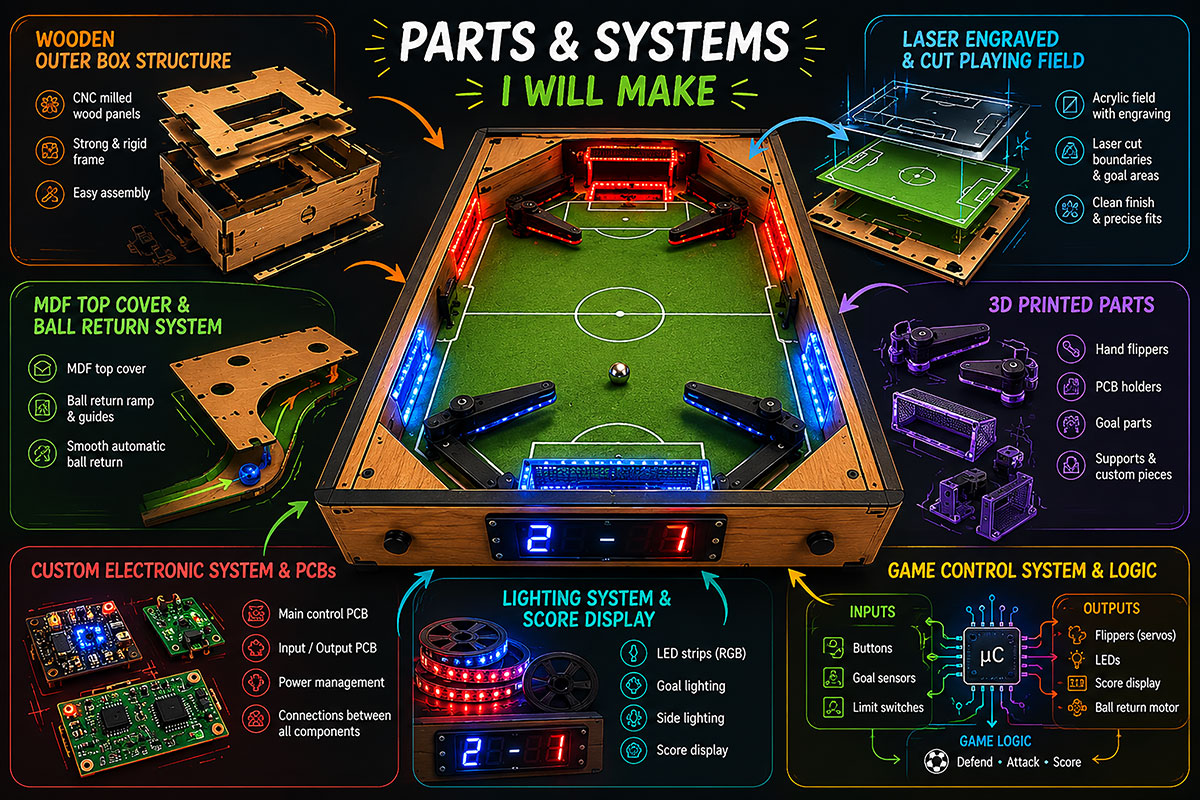
Several parts and systems will be designed and manufactured specifically for this project:
- Wooden outer box structure
- MDF top cover and ball return system
- Laser engraved and cut playing field
- 3D printed parts such as hand flippers and PCB holders
- Custom electronic system and PCBs
- Lighting system and score display
- Game control system and logic
Different fabrication processes learned during Fab Academy will be used throughout the project:
- CNC milling for manufacturing the wooden structure
- 2D design and laser cutting/engraving for the playing field
- Laser cutting on MDF for the top cover and additional parts
- 3D design and printing for custom components
- PCB design and CNC fabrication
- Embedded programming
- Mechanical and electronic system integration
The combination of all these techniques will allow me to fabricate most of the project instead of relying on external parts.
During the development process, several important questions still need to be answered:
- What is the optimal playing field angle to ensure smooth ball movement?
- Will the automatic ball return system work reliably after each goal?
- How should the flipper speed and force be adjusted to create balanced gameplay?
- Will the goal detection system work correctly in all situations?
- Are the selected materials strong and durable enough?
- Does the final experience feel fun, intuitive, and engaging for players?
The project will be evaluated by testing both its technical functionality and the overall user experience.
Some evaluation criteria will include:
- Correct operation and responsiveness of the flippers
- Accurate goal detection
- Reliable operation of the automatic ball return system
- Proper score display and lighting effects
- Successful integration of all mechanical and electronic systems
- Quality of assembly and final appearance
- Whether the game feels dynamic, balanced, and enjoyable for different users
Additionally, real user testing will be performed to identify possible improvements and detect any issues or areas that could be optimized.
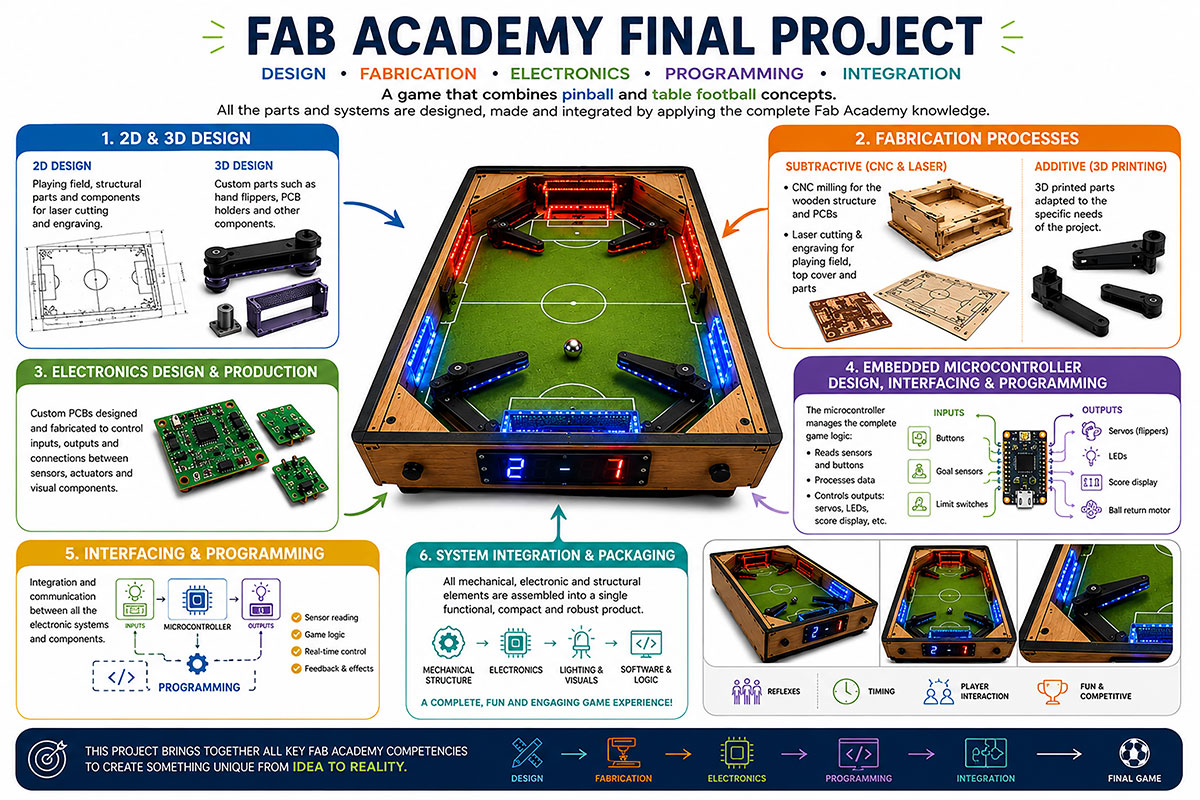
Your project should incorporate 2D and 3D design, additive and subtractive fabrication processes, electronics design and production, embedded microcontroller design, interfacing, and programming, system integration and packaging
This project integrates and combines different skills and processes learned throughout Fab Academy, bringing together design, fabrication, electronics, and programming into a single functional system.
Regarding 2D and 3D design, different elements required for the project have been designed and developed. 2D design has been used to create the playing field, structural parts, and components intended for laser cutting and engraving. On the other hand, 3D design has been used to model custom parts such as the hand flippers, PCB holders, and other specific components required for system integration.
The project also incorporates both additive and subtractive manufacturing processes. Additive manufacturing has been used through 3D printing to produce customized parts adapted to the specific needs of the project. Subtractive processes include CNC machining for manufacturing the wooden structure and PCBs, as well as laser cutting and engraving for producing different parts of the system.
Regarding electronics design and production, custom PCBs have been designed and fabricated to control the different elements of the project, including the required inputs, outputs, and connections between sensors, actuators, and visual components.
The project also includes embedded microcontroller design, interfacing, and programming, which are responsible for managing the complete game logic. The microcontroller receives information from sensors and buttons, processes the data, and controls different outputs such as servo motors, LEDs, and scoring systems.
In addition, an important part of the project involves interfacing and programming, integrating sensors, actuators, and multiple electronic systems to ensure that all components work together as a coordinated system.
Finally, the project includes a complete phase of system integration and packaging, where all mechanical, electronic, and structural elements are assembled into a single functional product. The goal is to create a compact, robust, and visually attractive machine that successfully integrates all the components developed throughout the process.
ChatGPT Fabrication processes slide Prompt Show prompt
Project Development.
I have prepared drafts of the summary slide and video for my final project, which I have placed in the root directory, and I have verified that they are linked from the final presentation schedule page.
Teaser slide

Teaser video
Week questions/tasks
Credits
All texts were written in Spanish and translated into English using Google Translate and ChatGPT.