Electronics Production
Grpup Assignment
Machine Settings
To use the machine, configure the settings as follows:
- Machine: Roland MonoFab SRM-20
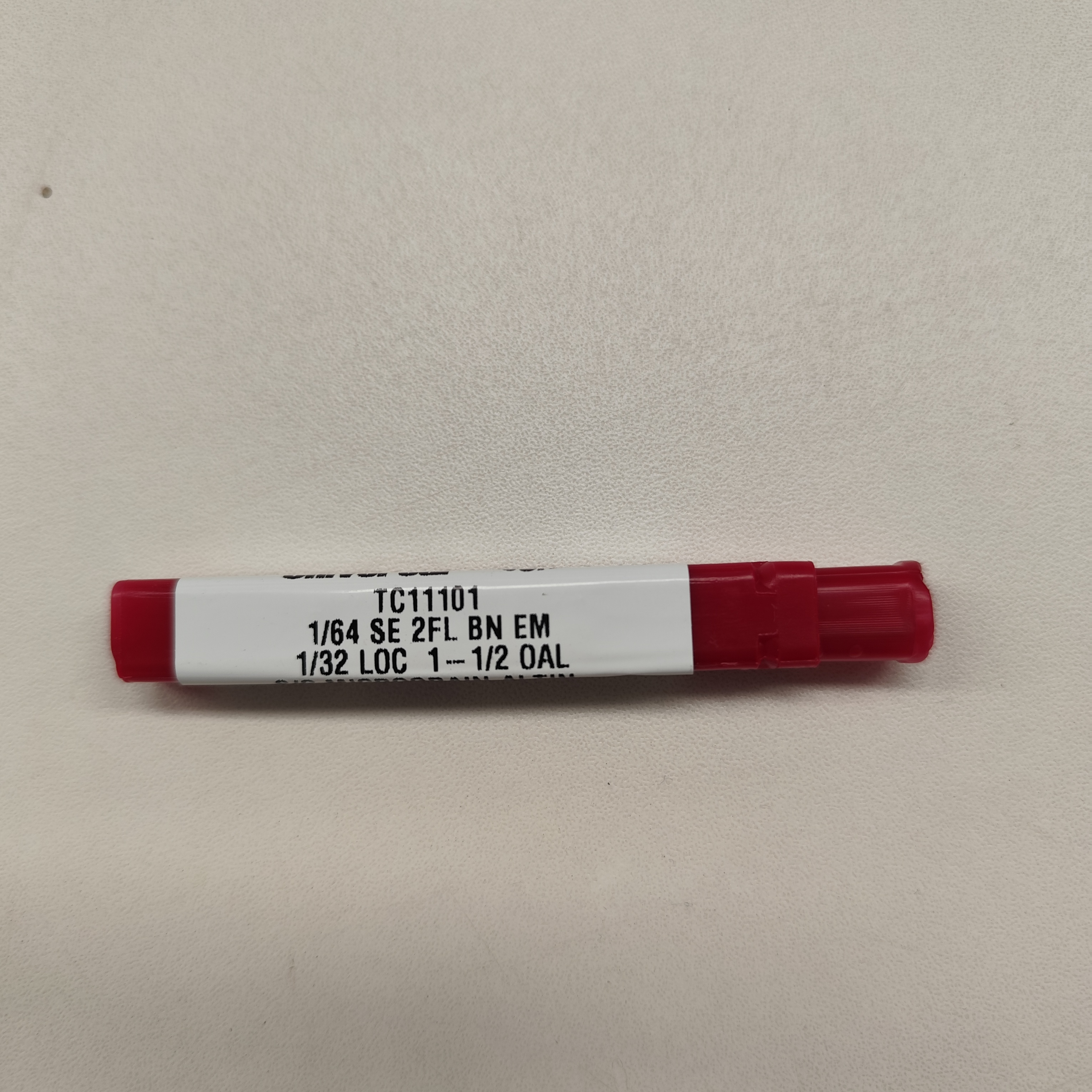
- Tooling (Trace Cutting): 1/64" (0.4mm) Flat End Mill (Tungsten Carbide)
- Tooling (Outline/Drills): 1/32" (0.8mm) Flat End Mill (Tungsten Carbide)
- Z-Depth (Cut Depth): 0.1 mm
- Spindle Speed (RPM): 80% (Approx. 5,600 RPM out of 7,000 max)
- Feed Rate: 60%
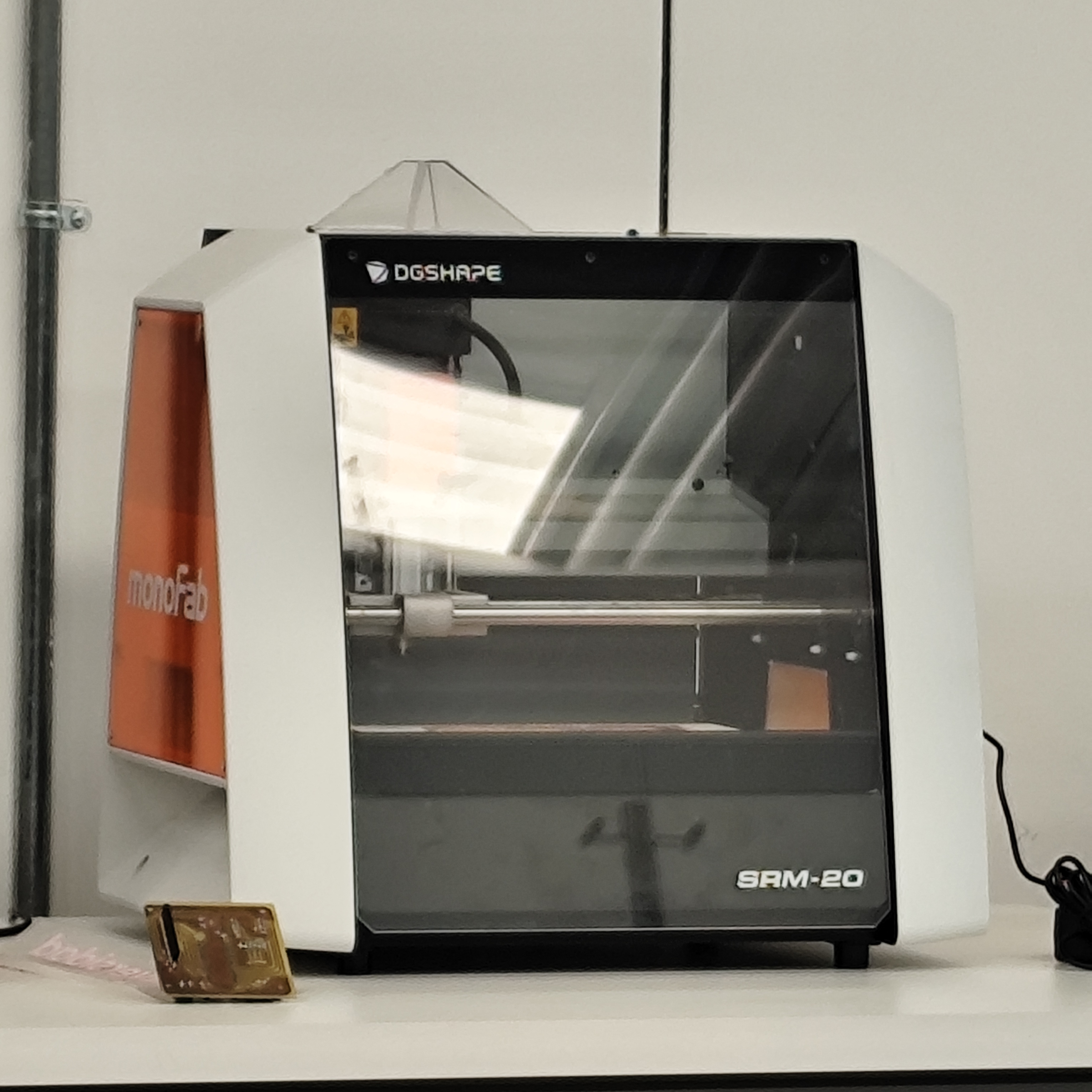
Tools Used
Since you are using a 1/64" (0.4 mm) end mill, the FlatCAM software will calculate the isolation passes based on that specific diameter.
- Minimum Clearance: The end mill diameter is 0.4 mm. Therefore, if your design features two traces separated by a distance smaller than 0.4 mm, the tool will not pass through that gap, leaving the copper joined and causing a short circuit.
- Minimum Trace Width: Inspect the thinnest traces of the test board under a magnifying glass or microscope. Using tungsten carbide at a 60% feed rate makes the SRM-20 highly stable; however, traces under 0.010" tend to lift or break easily during soldering.
Connection Diagram:
Online Quotation
To complete this task, we will consult PCBWay, which is one of the largest and most globally recognized electronic board manufacturers. Headquartered in China, they ship worldwide. You can request a quote for electronic boards using the following link:
LINK
Ordering Process
The main advantage of this platform is how easy it is to order a manufactured electronic board in just a few simple steps.
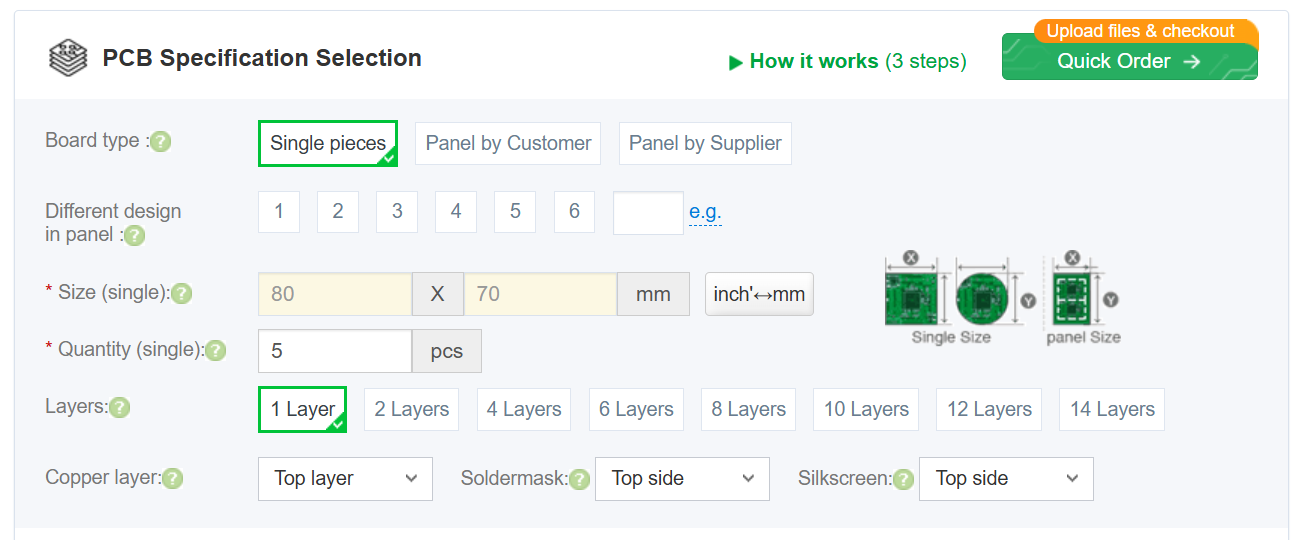
First, select the board specifications such as dimensions, quantity (minimum 5), layer count, and solder mask options.
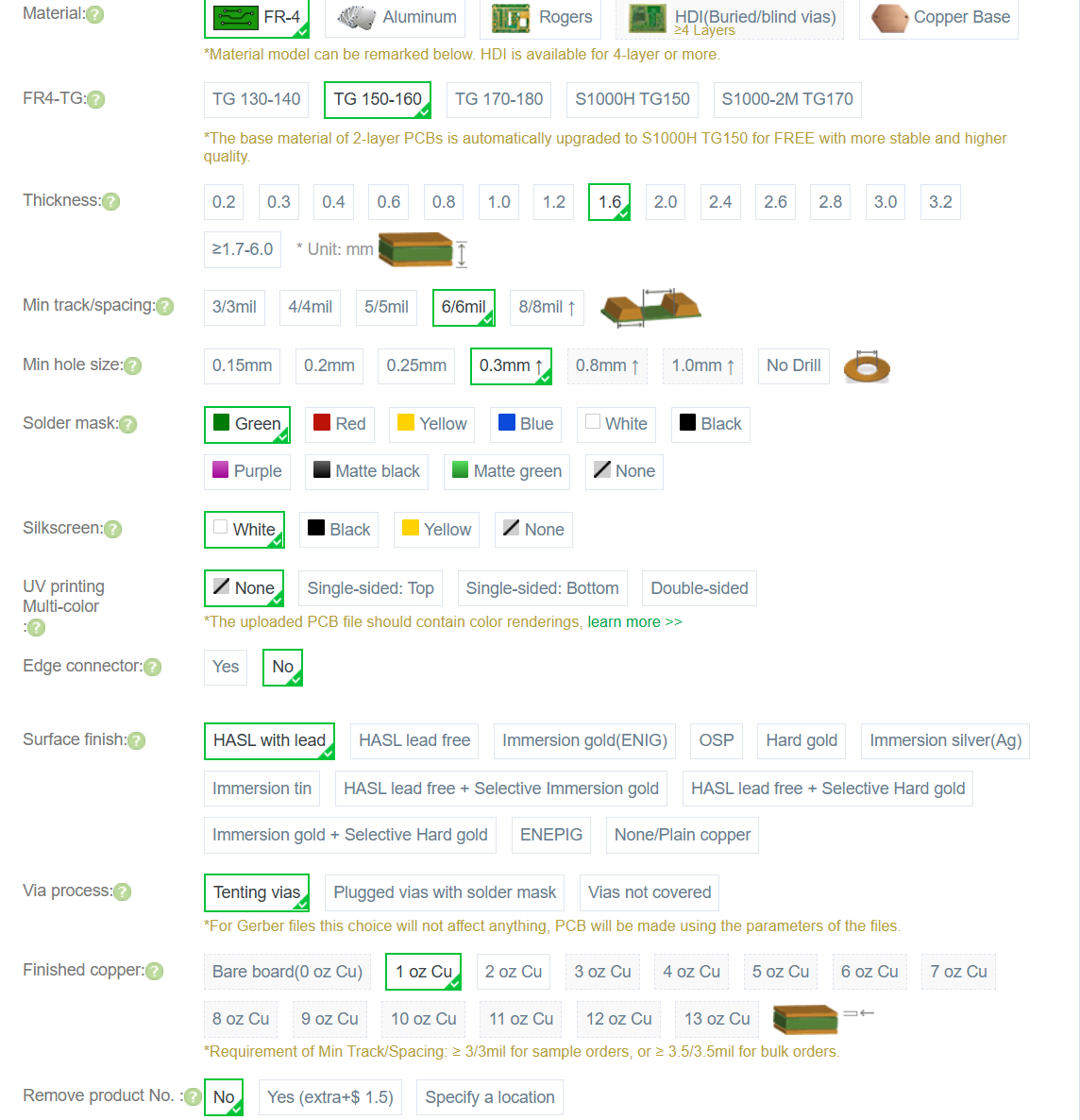
Next, select the more specific configuration parameters for the board manufacturing process, choosing the options according to our design requirements.
Upload the Gerber files of our electronic design.

To get the final quote, select the destination country for the PCB delivery and choose the shipping method.
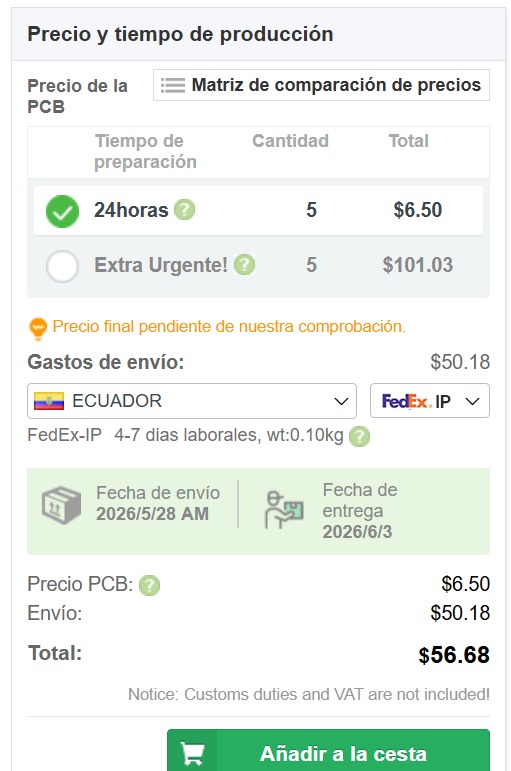
As shown, while the manufacturing cost of the boards is inexpensive, the shipping fees increase the total price significantly.
Conclusions
This week allowed us to apply mechanical design principles to the development of a functional CNC plotter for markers. We learned how to integrate the mechanical components, including the structure and mechanisms, using stepper motors and an Arduino-based CNC Shield to control the axes.
We also understand the importance of mechanical precision, as the correct alignment of the axes and the rigidity of the structure directly influence the quality of the drawing. The design of the transmission system and the assembly of the components were key to achieving more stable and controlled movements.
Here, we were able to apply several topics learned throughout the Fab Academy and integrate them into a single system.
One of the main problems was calibrating the movement of the stepper motors, as small errors in the steps or configuration generated deviations in the final drawing.
Vibrations and slight play in the structure were also present, which affected the plotter's accuracy when drawing continuous lines or curves. Another drawback was the synchronization between the Arduino control and the mechanical behavior of the system, which required adjustments to the code and the CNC Shield configuration to improve the stability of the movement.