Scanning and 3D printing Lecture
Representative Infill Pattern Display Board
Introduction
The present project consisted of the design and fabrication of a representative display of infill patterns used in 3D printing. The main objective was to visually demonstrate how different infill types and percentages vary in additive manufacturing, allowing a better understanding of their structural and aesthetic differences. To achieve this, digital modeling and design software such as Fusion 360, Bambu Studio, and AutoCAD were used, in addition to 3D printing and computer-controlled cutting processes. The final result integrates CAD design, digital fabrication, and assembly knowledge, obtaining an educational and visually appealing display board.
Development
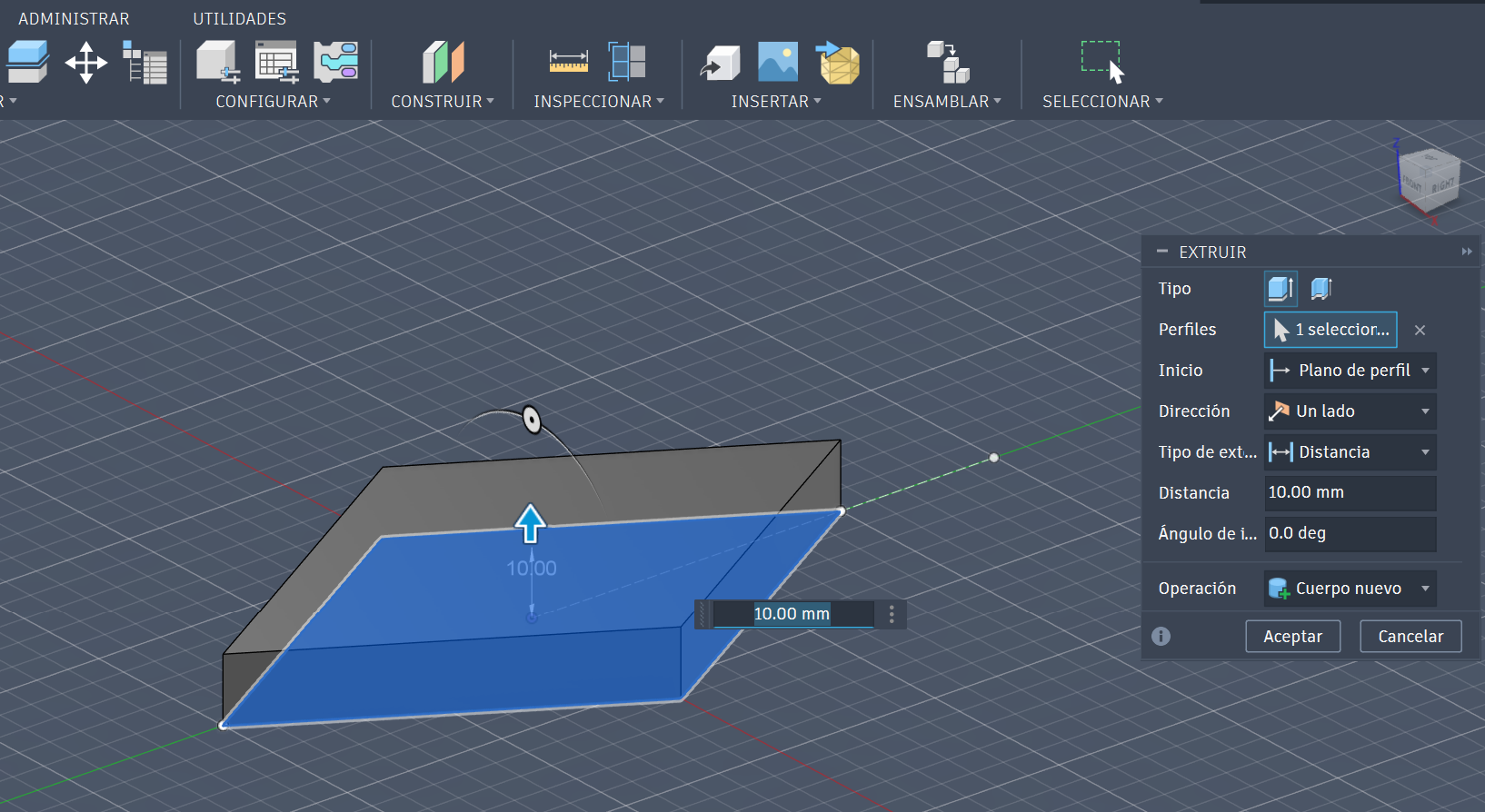
The project began with the design of a base module in Fusion 360, selecting a diamond-shaped geometry due to its modularity and ease of generating repetitive patterns. Using basic line and extrusion tools, the initial part was created.
Subsequently, in Bambu Studio, the different infill patterns were organized, determining a total of 22 diamond-shaped pieces required to represent each infill type. After this, the top layer of the parts was removed by setting the top layer thickness to zero, allowing a clear visualization of the internal structure of each pattern.
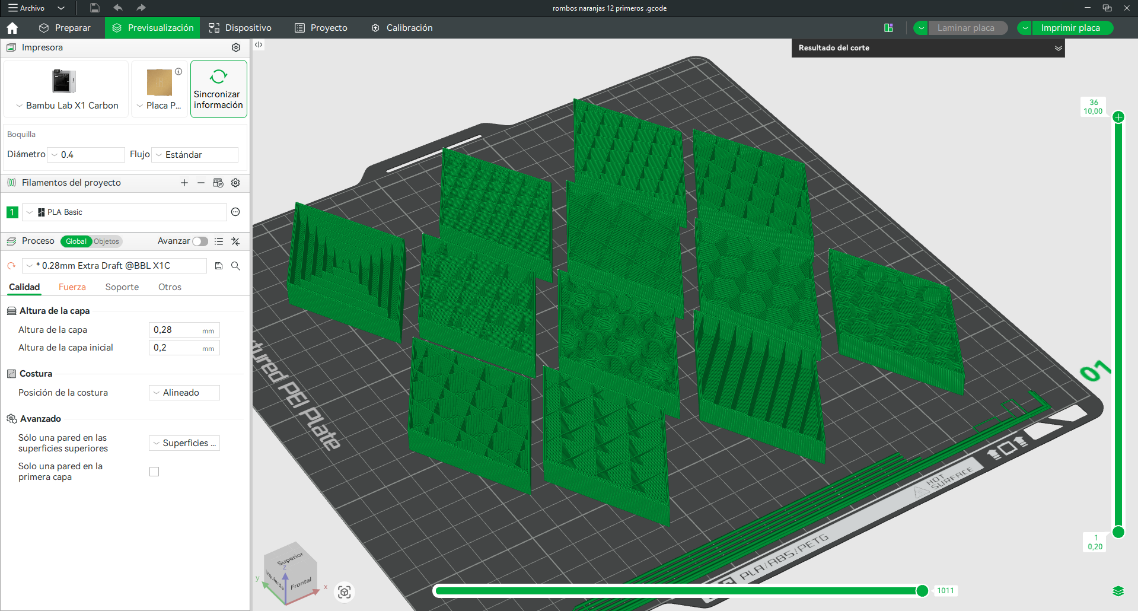
Once the infill patterns were configured, different density percentages were applied in order to observe the variations between each one. The original 22 diamond-shaped pieces were replicated using three density levels: low, medium, and high, resulting in a total of 66 parts.
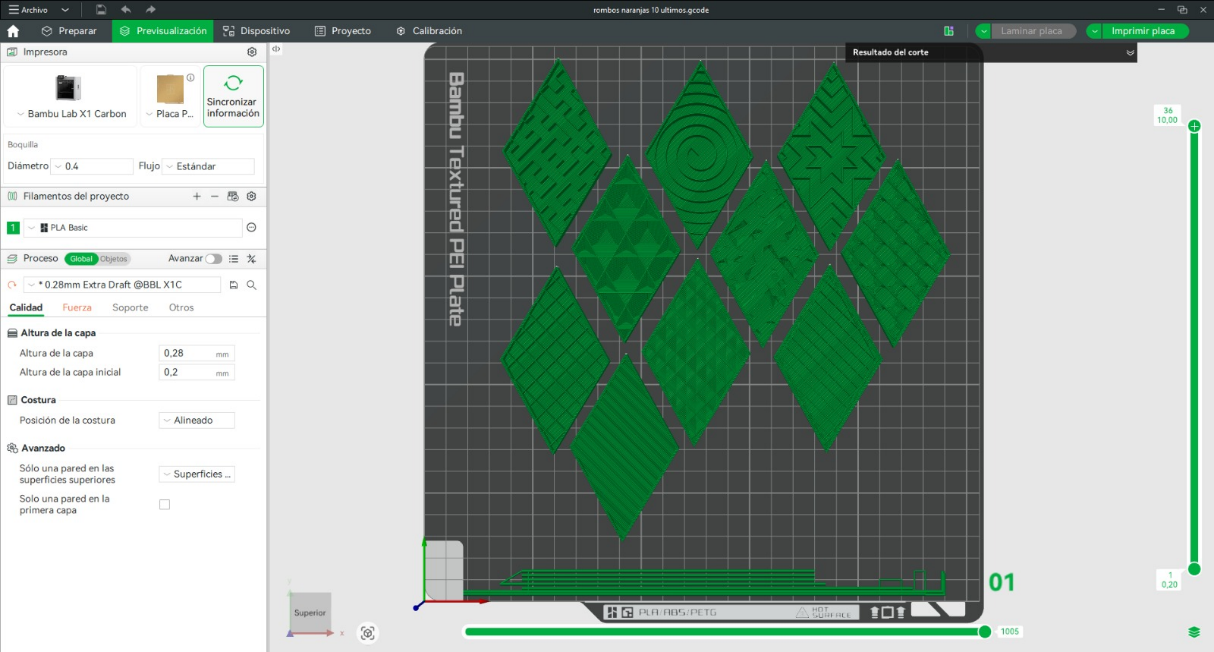
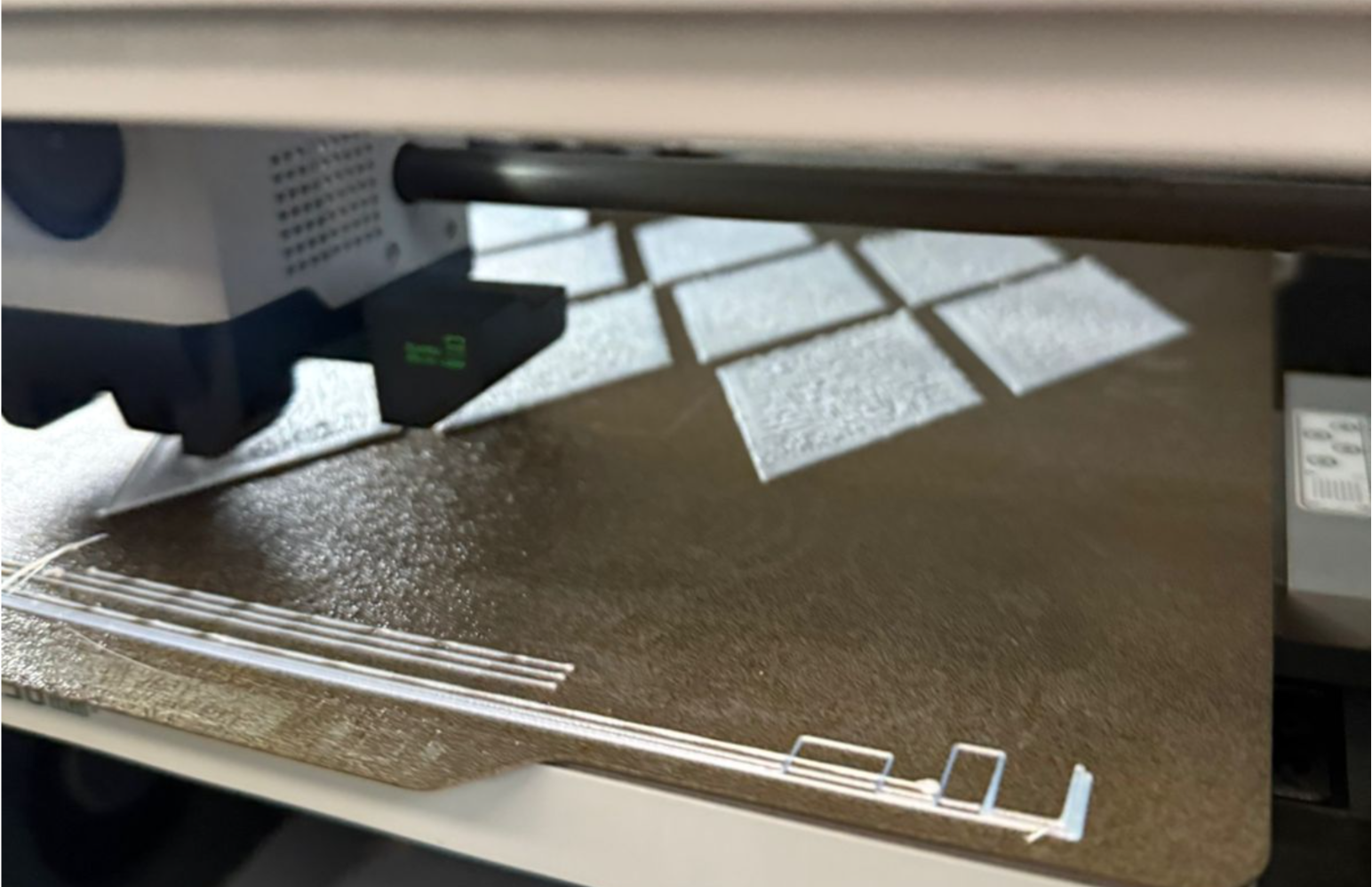
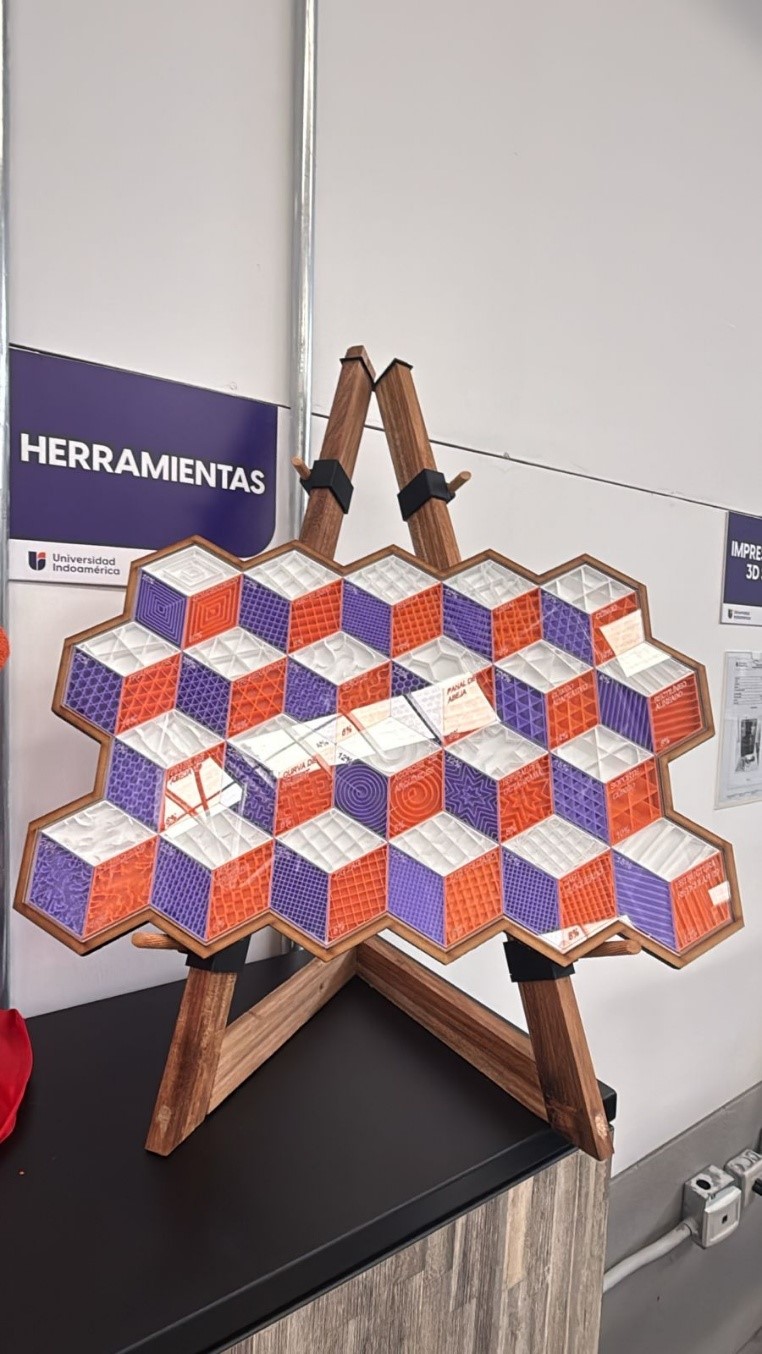
With the files completed, the 3D printing process was carried out using filaments of different colors to facilitate visual differentiation. White represented low infill percentages, orange represented medium percentages, and purple represented high infill percentages.
Afterward, the base and frame components were designed in AutoCAD. The structure consisted of a wooden base, support edges, and an acrylic cover engraved with the names and percentages of the infill patterns. These components were manufactured through laser cutting using the Fusion Maker machine with previously established parameters.
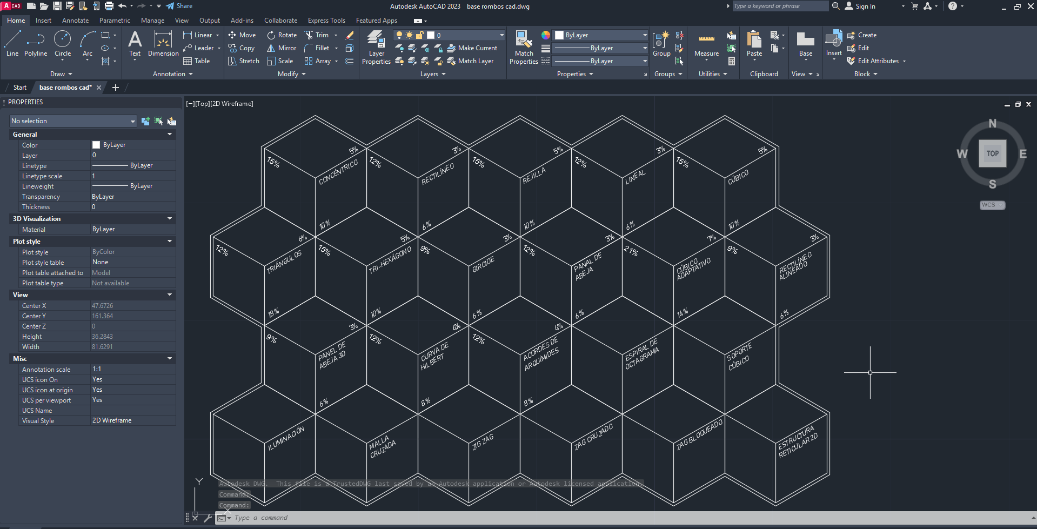
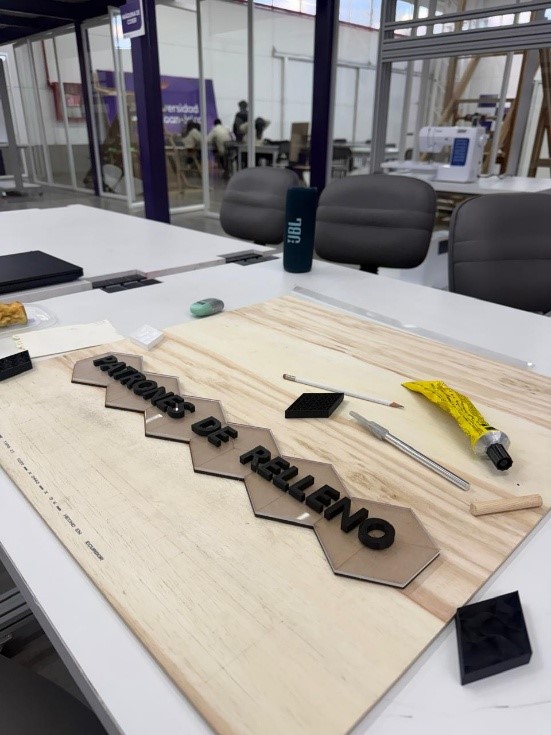
Subsequently, the structure was assembled using adhesives, screws, dowels, and specially designed 3D-printed parts that functioned as anchors to support the display board. Finally, a decorative title was manufactured through MDF and acrylic cutting, complemented with 3D-printed letters and spacers that provided depth and enhanced the overall presentation of the project.
Results
As a result, a representative display board of infill patterns for 3D printing was obtained, consisting of 66 diamond-shaped pieces organized according to the infill type and percentage. The color differentiation allowed an easy identification of the variations between low, medium, and high-density infill patterns.
In addition, the use of a wooden structure with an acrylic cover provided protection and a professional presentation for the project. The final display board clearly showcased the internal geometry of each infill pattern, facilitating the understanding of how infill percentages influence the structure of 3D-printed parts.
Conclusions
The development of the representative display board provided a practical understanding of the operation of different infill patterns and percentages used in 3D printing. It was demonstrated that infill density directly influences the internal appearance and structural strength of printed parts.
Additionally, the project integrated various digital manufacturing processes such as CAD modeling, 3D printing, and computer-controlled cutting, strengthening technical skills in design and assembly. Finally, the obtained result constitutes an educational visual tool that facilitates the learning of infill types and their applications within additive manufacturing.